Refrigeration Capacity Sizing & Equipment Selection Guide
The 6 critical engineering inputs required to size condensing units and evaporators accurately: dimensions, product entry temp, daily turnover, and ambient climate.
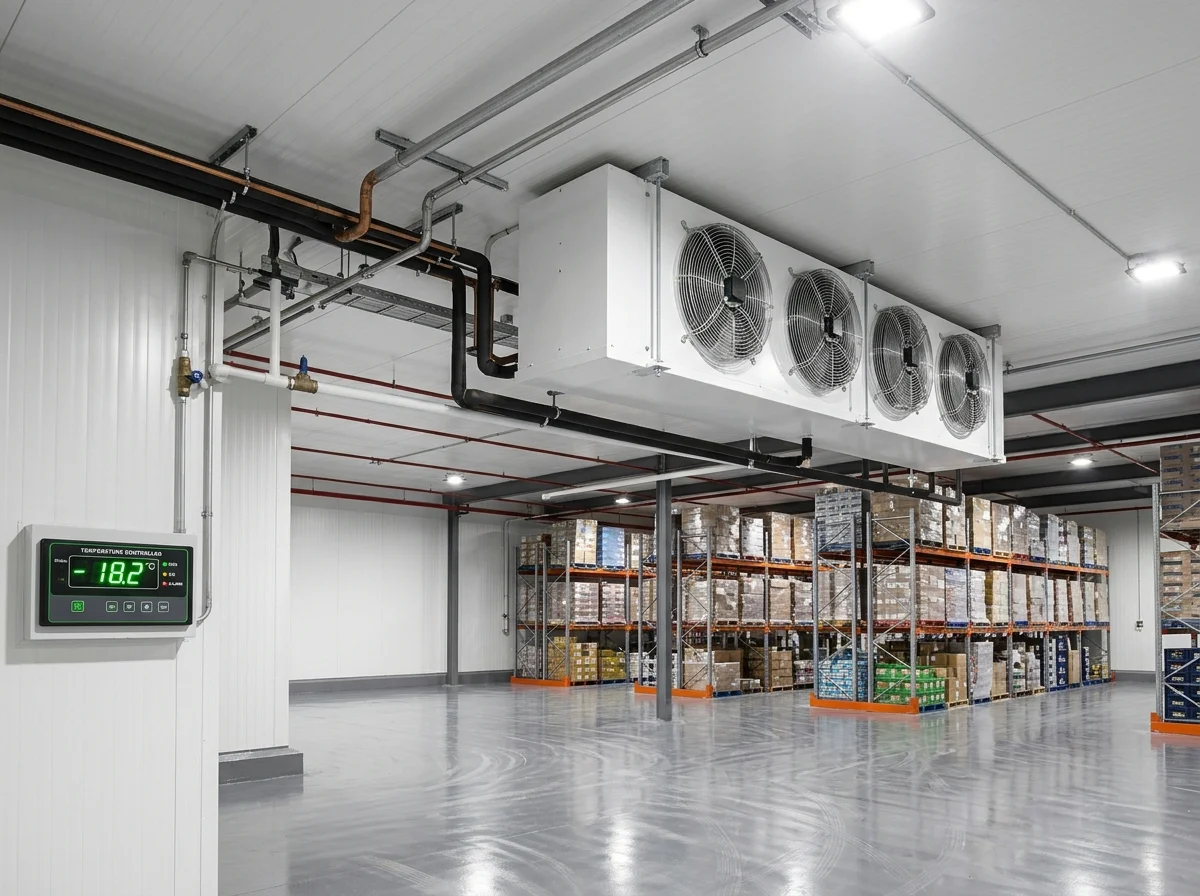
1. More Important Than Room Volume: Daily Product Turnover & Entry Temperature
A 100 m³ room receiving 1 ton/day of pre-cooled +6°C product requires one-third the cooling capacity of the same room receiving 8 tons/day of warm +28°C field-harvested produce.
Related Manufactured Products & System Solutions
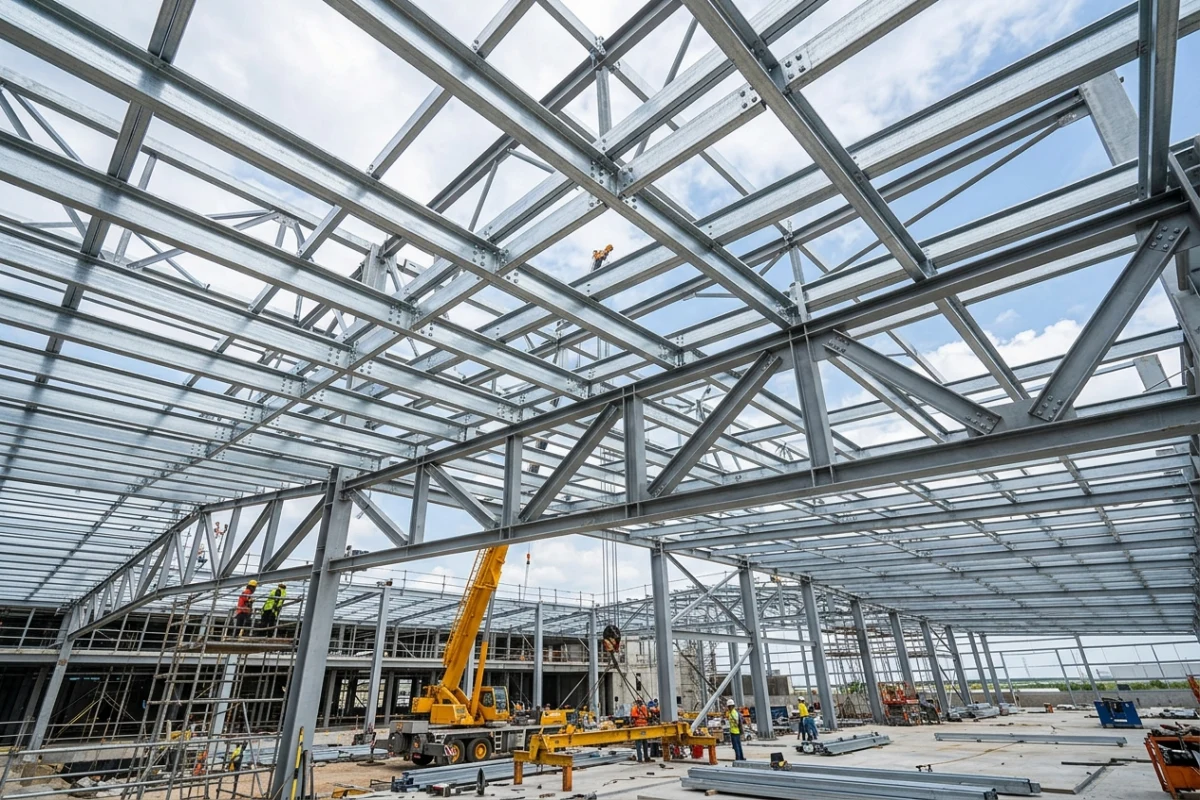 SERHANGAR • ÇELİK KARKAS
Steel-Framed Cold Storage Building
Structural steel frame engineered for suspended insulated ceilings and zero thermal bridges.
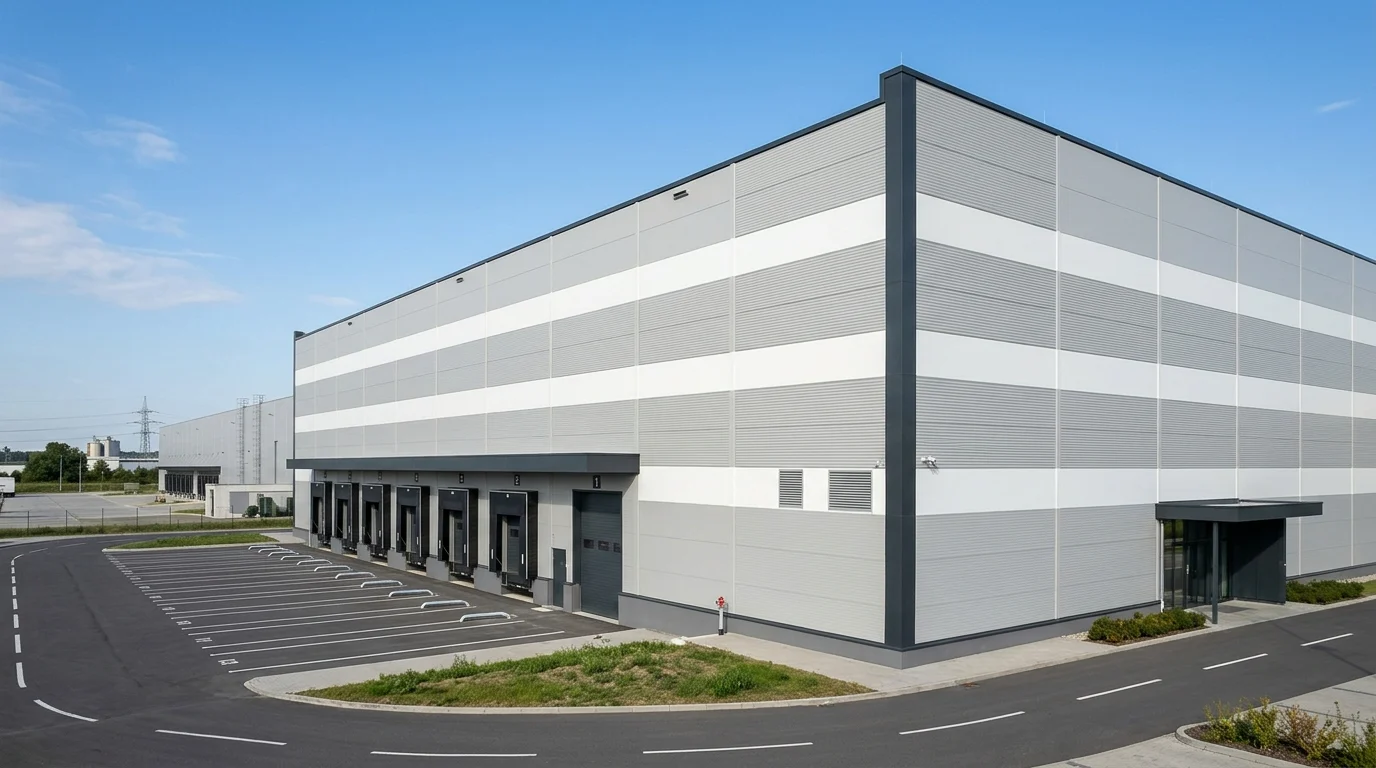 SERPAN METAL • GİZLİ VİDALI
External Facade & Roof Panels
Secret-fix facade and 5-ribbed roof sandwich panels for weatherproof building envelopes.
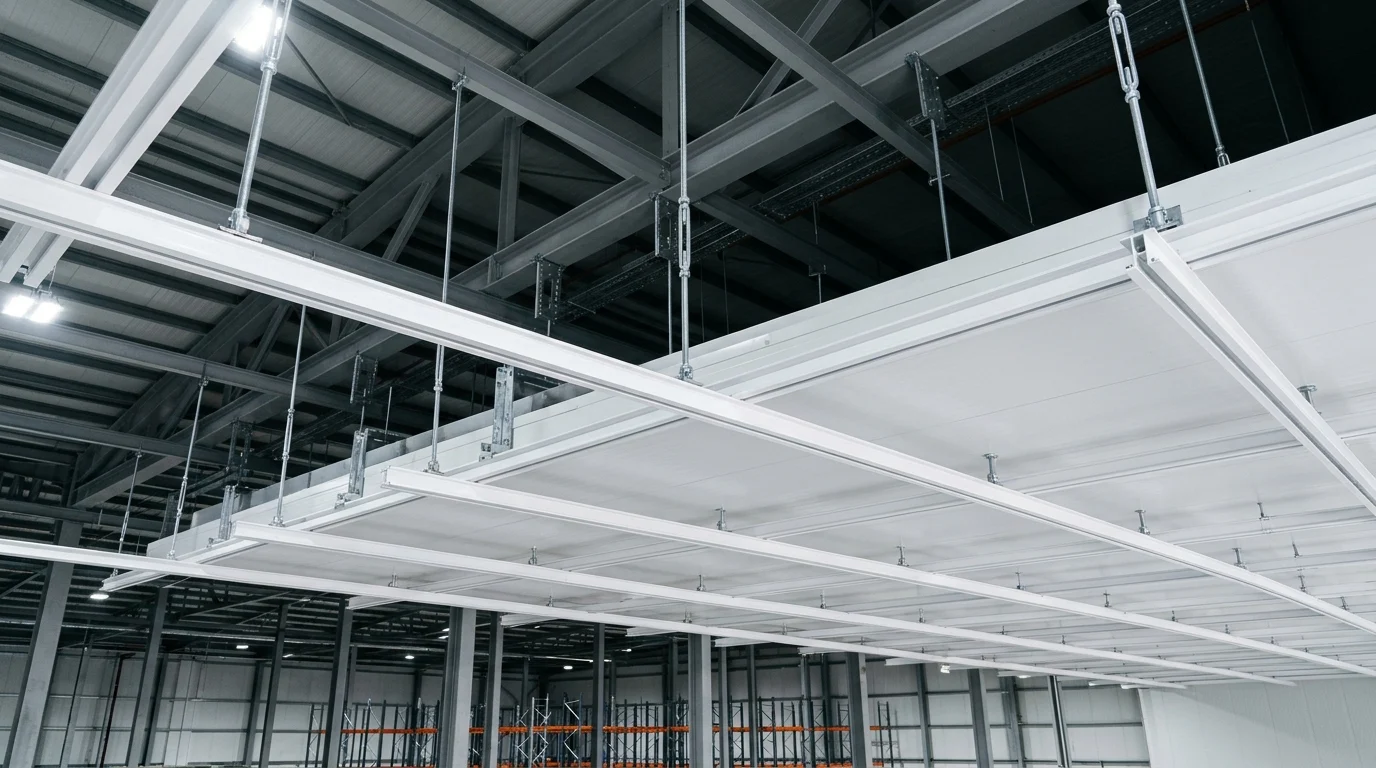 T-PROFİL • TAVAN ASKI
Aluminium T-Bar Ceiling Suspension
Thermal-break aluminium T-bar suspension system for wide-span cold storage ceilings.
Tableau Comparatif et de Sélection Technique
| Hesaplama Parametresi | Neden Gereklidir? | Örnek Değer |
|---|---|---|
| Oda Dış/İç Ölçüleri (E×B×Y) | Yüzey ısı iletim yükü ve hava hacmini belirler | 10.0 m × 8.0 m × 4.5 m (360 m³) |
| Hedef Oda Sıcaklığı ve Nem | Evaporasyon sıcaklığını ve lamel aralığını belirler | +2°C / %90 RH veya -20°C |
| Toplam ve Günlük Ürün Tonajı | Günlük çekilecek ürün ısısını (kcal/saat - kW) belirler | Toplam 60 Ton / Günlük 8 Ton Giriş |
| Ürün Giriş Sıcaklığı | En büyük ısıl yük kalemini doğrudan değiştirir | +22°C'den +2°C'ye (16 saatte düşüş) |
| Lokasyon & Dış Ortam Sıcaklığı | Kondenser kapasitesini ve panel kalınlığını belirler | Antalya (+42°C) vs Erzurum (+32°C) |
Produits, Systèmes et Pages Techniques Associés
INDUSTRIAL REFRIGERATION
Cold Storage Refrigeration Systems & Control Solutions
Matching the insulated thermal envelope with properly sized refrigeration equipment cuts power consumption by up to 25%. We engineer complete cooling packages tailored to your product intake and climate zone.
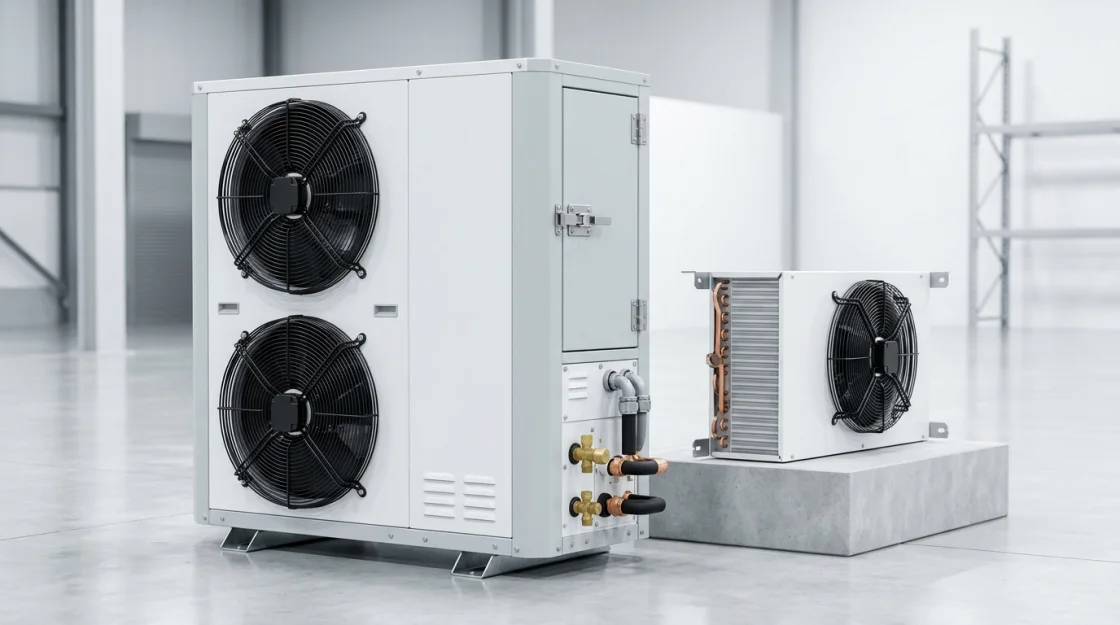 SPLIT CONDENSING UNITS
Industrial Split Condensing Units
Providing independent temperature control and redundancy for each room, our split condensing units feature tropicalized condensers (+43°C / +48°C ambient) and pre-wired electrical panels.
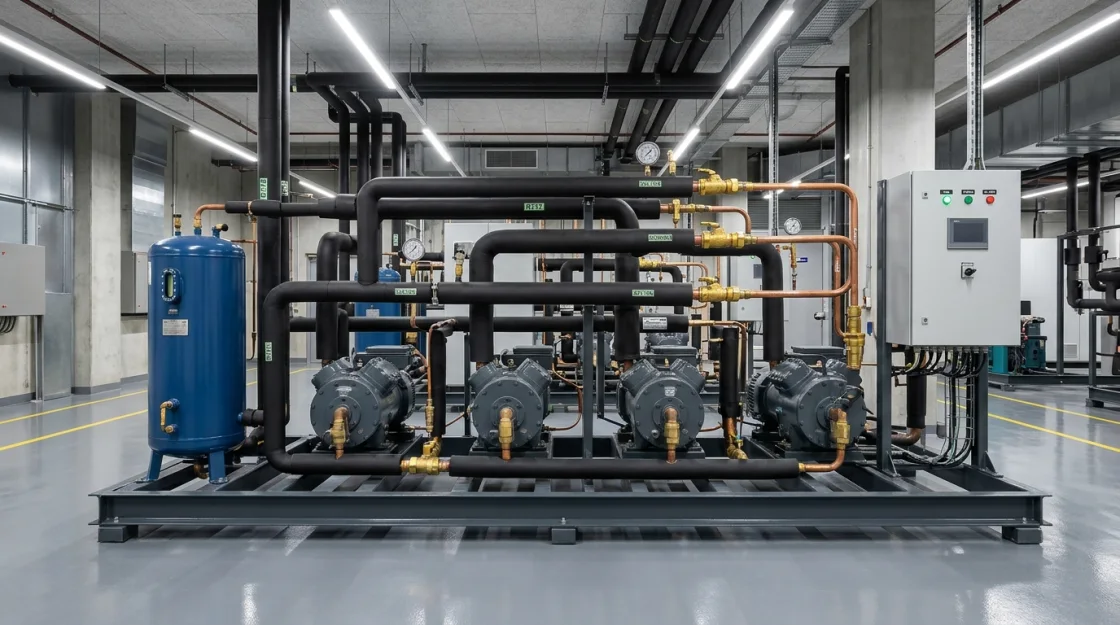 CENTRAL RACK SYSTEMS
Central Multi-Compressor Rack Refrigeration Systems
For multi-room cold storage facilities and food processing plants, central compressor racks modulate capacity dynamically across partial loads, maximizing energy efficiency and N+1 reliability.
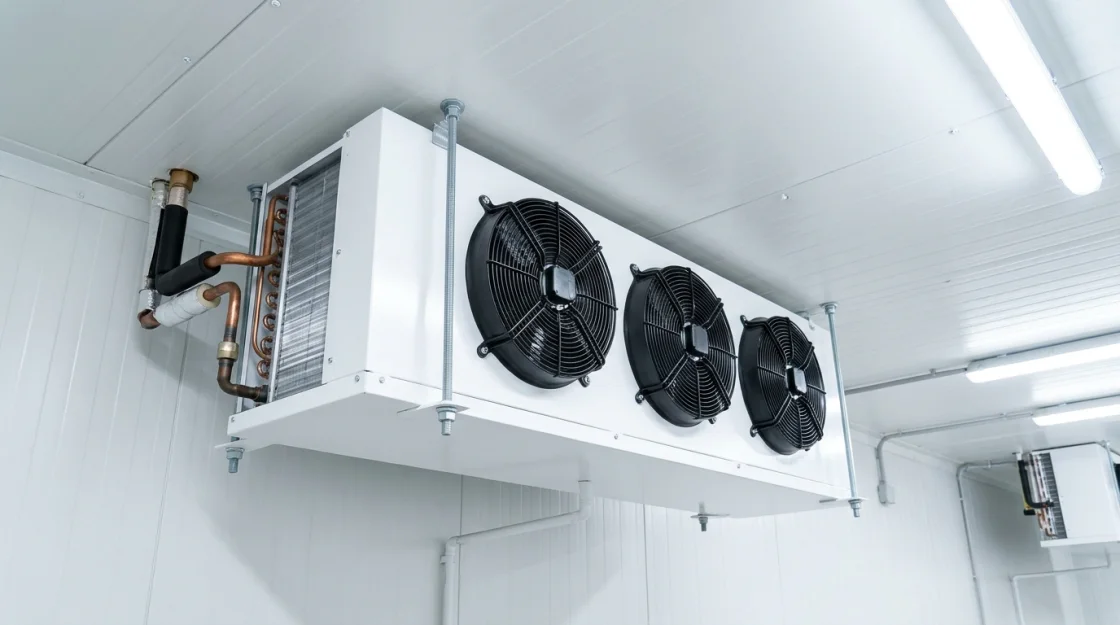 UNIT COOLERS & EVAPORATORS
Cold Room Unit Coolers (Evaporators) & Heat Exchangers
Preventing product dehydration, ensuring uniform pallet temperatures, and maintaining draft-free working halls depend on selecting the right evaporator geometry and fin spacing (4 / 6 / 8 / 10 / 12 mm).
Questions Fréquentes sur l'Ingénierie et la Fourniture
Questions techniques fréquentes sur les portes frigorifiques, le choix de l’épaisseur des panneaux, l’étanchéité et les projets clé en main.
C21 Can refrigeration capacity be calculated based solely on room volume (m³)?
No. Room volume alone only provides a preliminary estimate. Actual cooling load depends on daily product intake tonnage, product entry temperature, specific heat, pull-down time, ambient climate, and door opening frequency.
C22 Is a frozen storage room (-18°C) the same as a blast freezer room (-35°C / -40°C)?
Definitely not. A frozen storage room (-18°C) maintains products that are already frozen. A blast freezer (-35°C / -40°C) uses high-velocity airflow and high refrigeration capacity to rapidly pull down core product temperature to -18°C within hours.
C23 Should we choose individual split condensing units or a central multi-compressor rack system?
For facilities with 1 to 4 rooms or where independent redundancy per room is desired, industrial split units (R01) are cost-effective. For large multi-room logistics hubs and food factories, central multi-compressor racks (R02) offer superior energy efficiency and capacity modulation.
C24 Why is fin spacing critical when selecting cold room unit coolers (evaporators)?
While 4–6 mm fin spacing works for positive (+2/+8°C) chillers, sub-zero freezers (-18°C) require 7–8 mm and blast freezers require 10–12 mm wide fin spacing to prevent rapid frost bridging and airflow blockage.
C25 Why is remote temperature monitoring and alarm data-logging (R04) necessary?
Digital data-logging and mobile alarm panels protect high-value inventory against power outages, open doors, or defrost faults while providing mandatory historical temperature audit trails for food safety and GDP inspections.
C26 Why should an ante-room (precooling / buffer corridor) be included in cold store design?
Opening a -18°C or +2°C chamber directly to +35°C outdoor air causes severe moisture ingress, icy floors, and high power consumption. A temperature-controlled +8/+12°C ante-room acts as a thermal airlock.
Sélectionnez Votre Parcours de Devis (4 Voies Techniques)
Sélectionnez le parcours adapté à votre besoin ; vos dimensions et paramètres seront transmis directement à notre bureau d’études sur WhatsApp. (+90 (505) 507 04 18)