HORECA, Hotel, Catering & Central Kitchen Walk-In Cold Rooms
Prevent cross-contamination in hotels and catering facilities with multi-chamber walk-in cold rooms featuring shared partition walls, non-slip stainless floors, and flush doors.
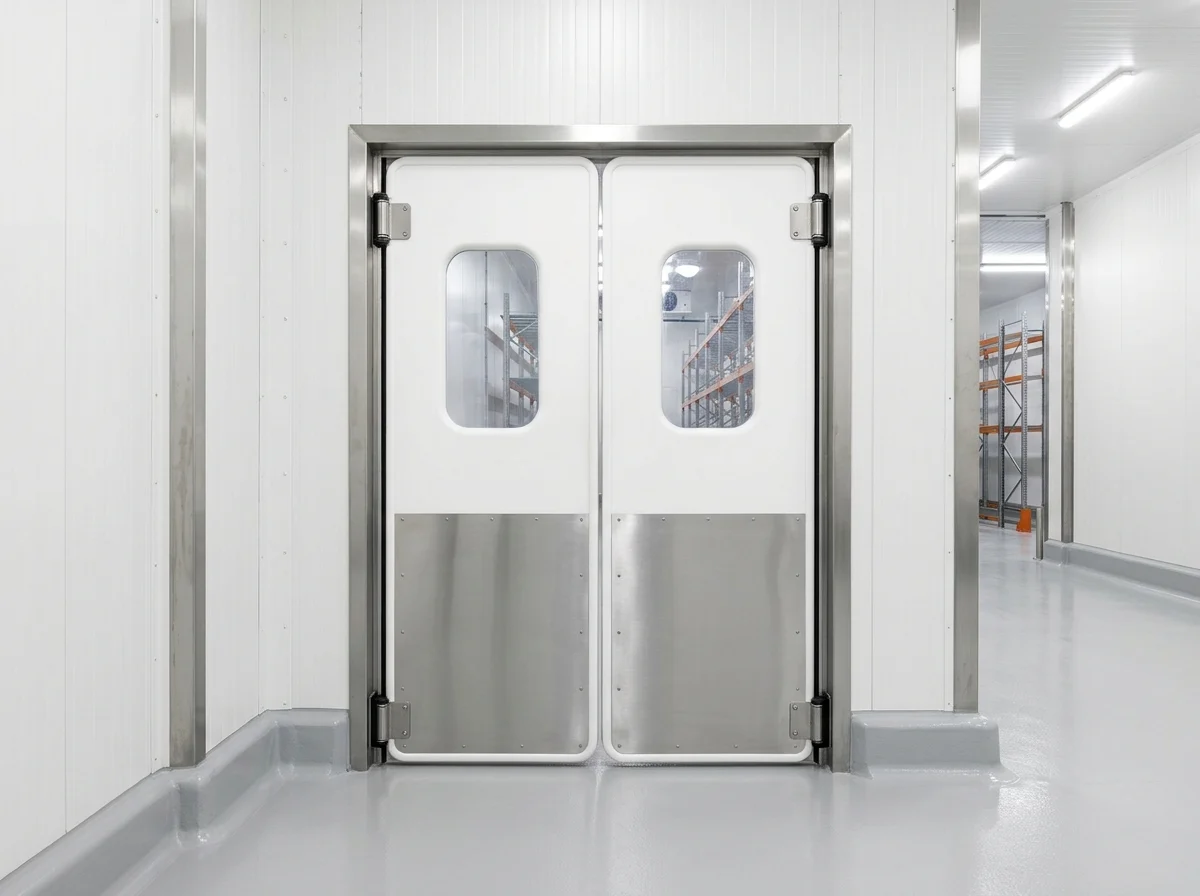
Fiche Récapitulative Technique
HORECA & CATERING ROOMSIntegrated Cold Chain Building, Panel & Door Systems
42 kg/m³ PUR / B-s1,d0 PIR sandwich panels, heavy-duty industrial cold storage doors, and central refrigeration packages manufactured at our Gebze plant.
 60–200 MM PUR / PIR PANELS
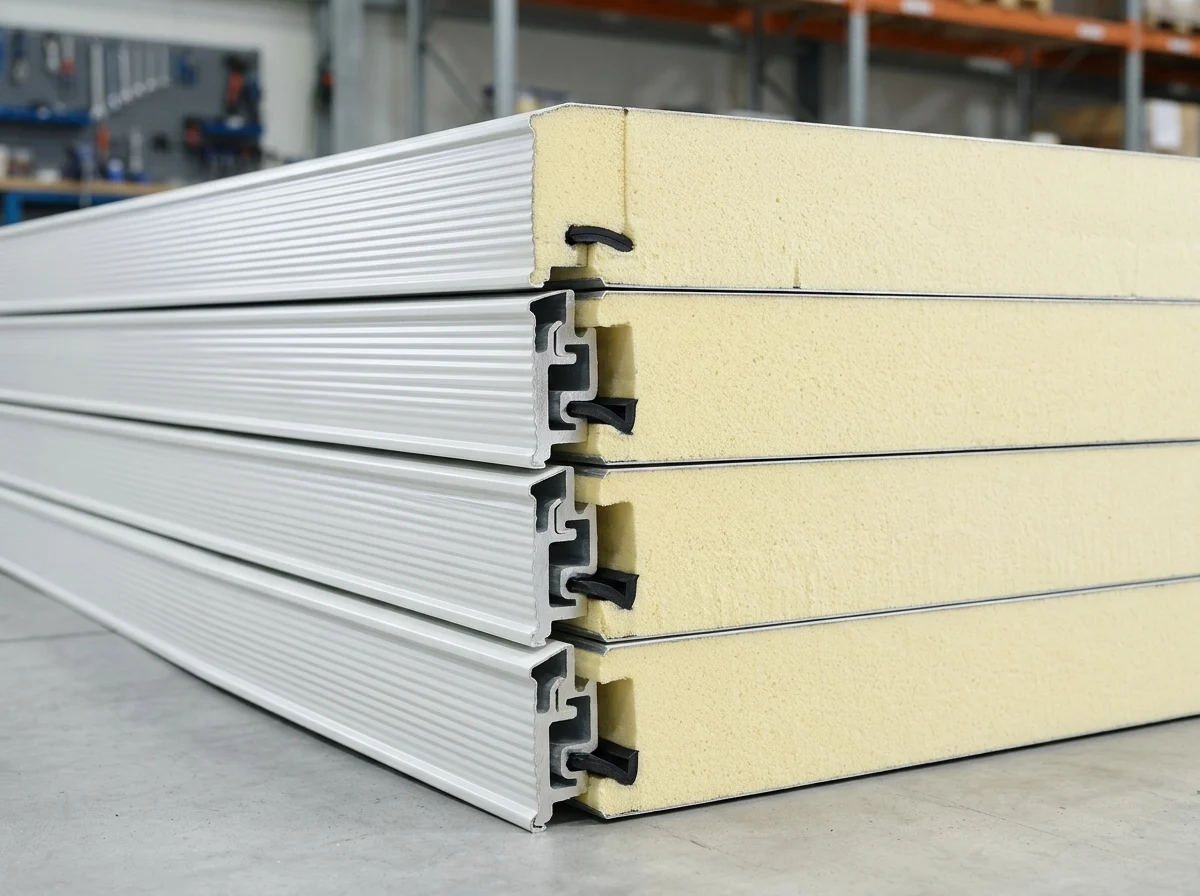
42 kg/m³ PUR & B-s1,d0 PIR Cold Room Panels
Cam-lock or tongue-and-groove joints with 0.50 mm DX51D+Z pre-painted galvanized steel facings.
 SPC DOOR SYSTEMS
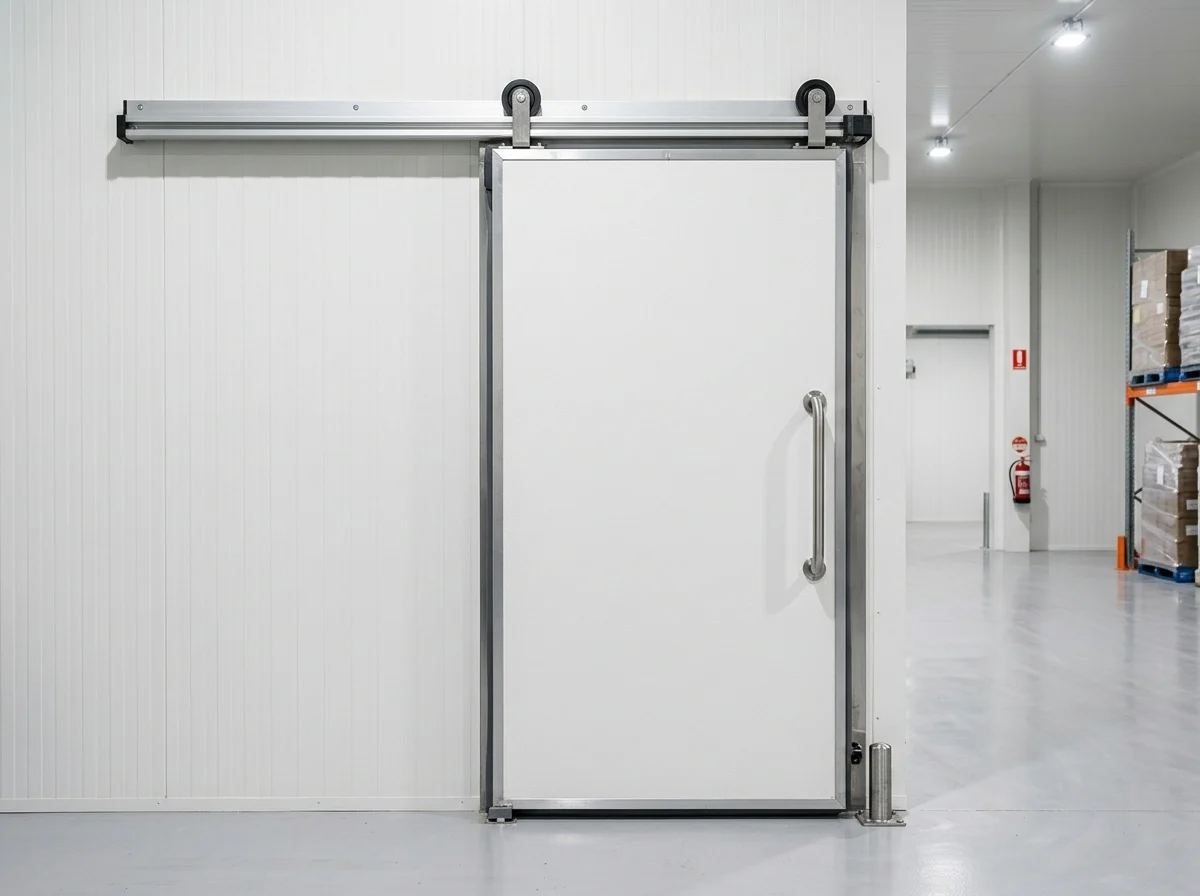
Industrial Sliding, Hinged & Monorail Doors
Heated frames, dual-row EPDM gaskets, and heavy-duty anodized aluminum tracks for -40°C blast and freezer rooms.
 COLD STORAGE BUILDINGS
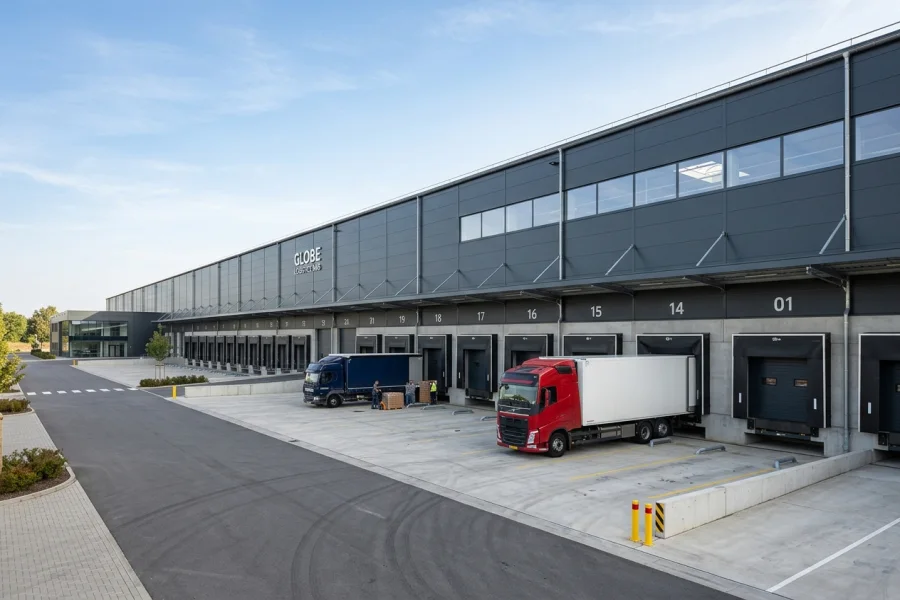
Steel-Framed Turnkey Cold Storage Buildings
187 m² to 1,000+ m² bolted structural steel frame, central refrigeration racks, and docked logistics facilities.
Produits, Systèmes et Pages Techniques Associés
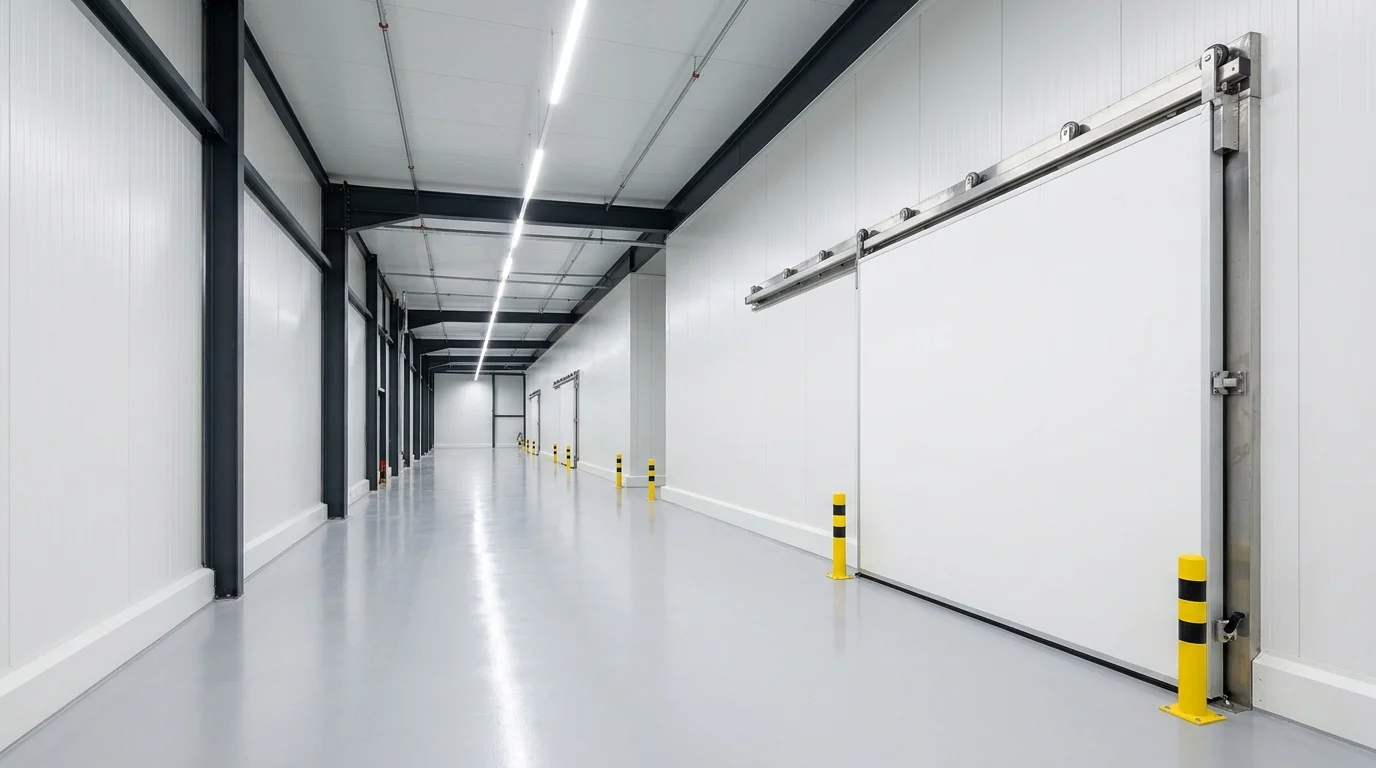 INDUSTRY COLD CHAIN
Sector-Specific Cold Room & Cold Storage Facility Engineering
A fruit storage warehouse has completely different humidity, door, and surface requirements than a meat abattoir or 3PL distribution hub. Explore our 8 sector engineering blueprints.
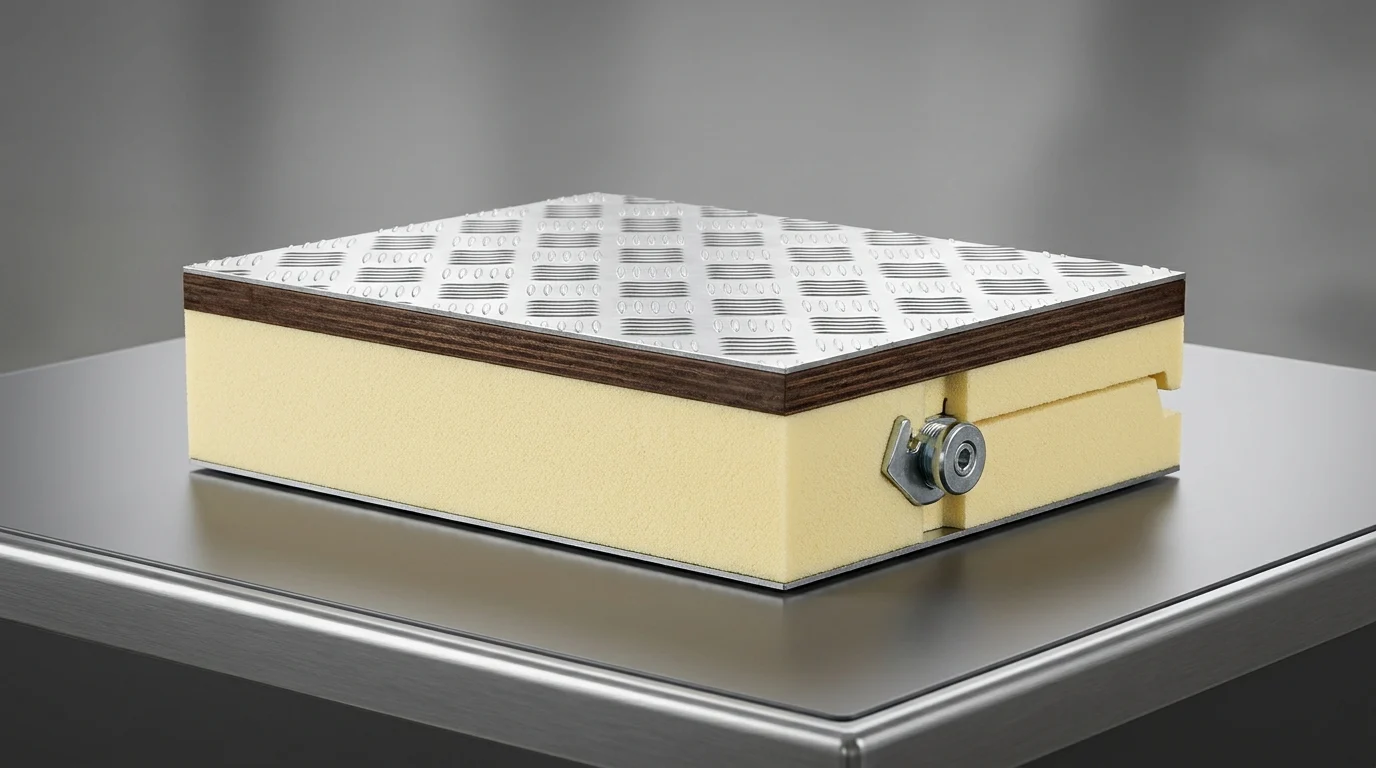 CAM-LOCK MODULAR ROOMS
Cam-Lock Modular Walk-In Cold Rooms
Installed in 1–2 days directly on any flat floor without civil works, our cam-lock modular walk-in rooms include prefabricated non-slip floor panels and can be disassembled and relocated anytime.
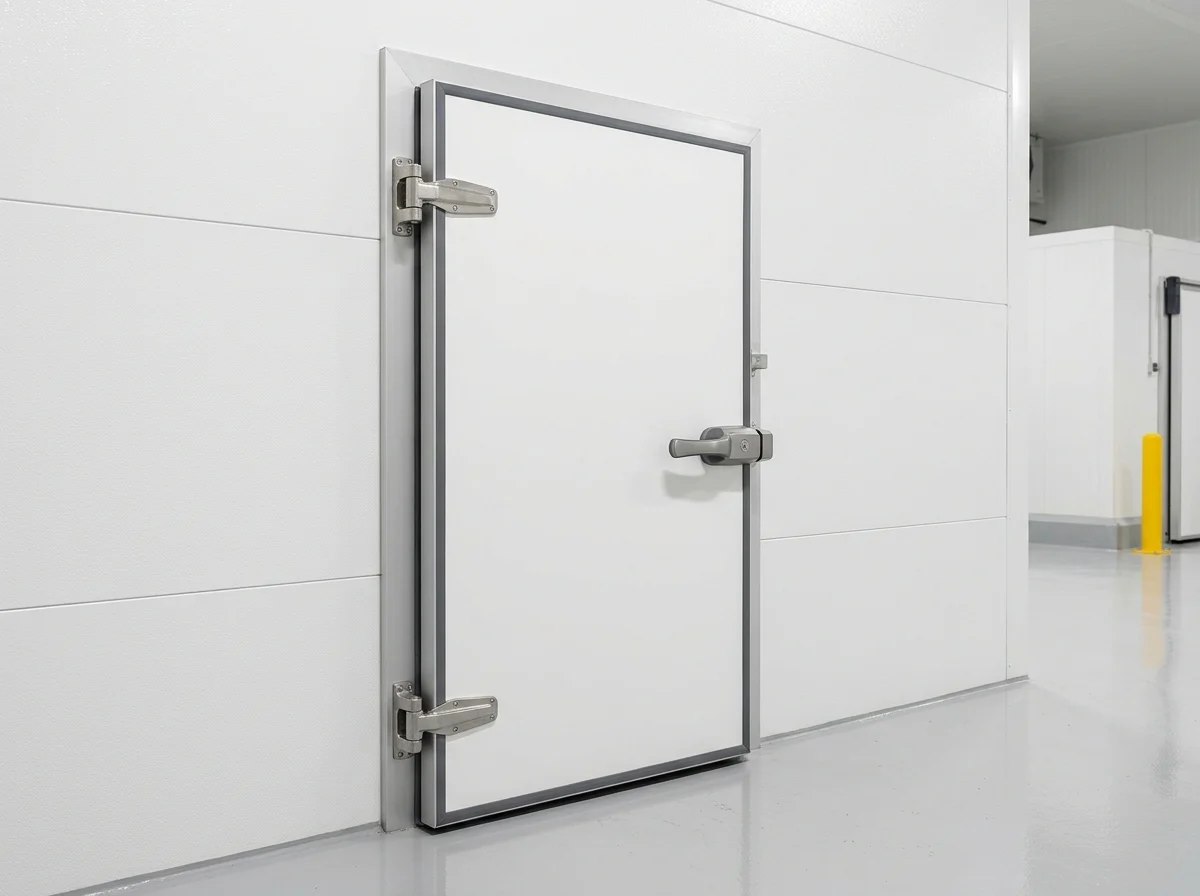 SPC-HD • HINGED DOOR
Hinged Cold Room Door (SPC-HD Series)
Designed for pedestrian and hand-trolley cold rooms, the SPC-HD series features rising cam-action hinges that lift the leaf during opening to protect the bottom sweep gasket and press tightly upon closing.
SPC-FF • TRAFFIC DOOR
Flip-Flap Hygienic Swing Traffic Door (SPC-FF)
Engineered for high-traffic food preparation, deboning, and packaging corridors where staff push trolleys or carry trays, SPC-FF doors swing 180° in both directions and self-close via heavy-duty spring hinges.
Questions Fréquentes sur l'Ingénierie et la Fourniture
Questions techniques fréquentes sur les portes frigorifiques, le choix de l’épaisseur des panneaux, l’étanchéité et les projets clé en main.
C21 Can refrigeration capacity be calculated based solely on room volume (m³)?
No. Room volume alone only provides a preliminary estimate. Actual cooling load depends on daily product intake tonnage, product entry temperature, specific heat, pull-down time, ambient climate, and door opening frequency.
C22 Is a frozen storage room (-18°C) the same as a blast freezer room (-35°C / -40°C)?
Definitely not. A frozen storage room (-18°C) maintains products that are already frozen. A blast freezer (-35°C / -40°C) uses high-velocity airflow and high refrigeration capacity to rapidly pull down core product temperature to -18°C within hours.
C23 Should we choose individual split condensing units or a central multi-compressor rack system?
For facilities with 1 to 4 rooms or where independent redundancy per room is desired, industrial split units (R01) are cost-effective. For large multi-room logistics hubs and food factories, central multi-compressor racks (R02) offer superior energy efficiency and capacity modulation.
C24 Why is fin spacing critical when selecting cold room unit coolers (evaporators)?
While 4–6 mm fin spacing works for positive (+2/+8°C) chillers, sub-zero freezers (-18°C) require 7–8 mm and blast freezers require 10–12 mm wide fin spacing to prevent rapid frost bridging and airflow blockage.
C25 Why is remote temperature monitoring and alarm data-logging (R04) necessary?
Digital data-logging and mobile alarm panels protect high-value inventory against power outages, open doors, or defrost faults while providing mandatory historical temperature audit trails for food safety and GDP inspections.
C26 Why should an ante-room (precooling / buffer corridor) be included in cold store design?
Opening a -18°C or +2°C chamber directly to +35°C outdoor air causes severe moisture ingress, icy floors, and high power consumption. A temperature-controlled +8/+12°C ante-room acts as a thermal airlock.
Sélectionnez Votre Parcours de Devis (4 Voies Techniques)
Sélectionnez le parcours adapté à votre besoin ; vos dimensions et paramètres seront transmis directement à notre bureau d’études sur WhatsApp. (+90 (505) 507 04 18)