3-in-1 Cold Room, Warehouse Building & Export Loading Simulator Hub
Enter your room or facility dimensions to instantly calculate wall/ceiling panel quantities, recommended thickness, door models, building space breakdown, or container loading—and send the result directly to our engineering team.
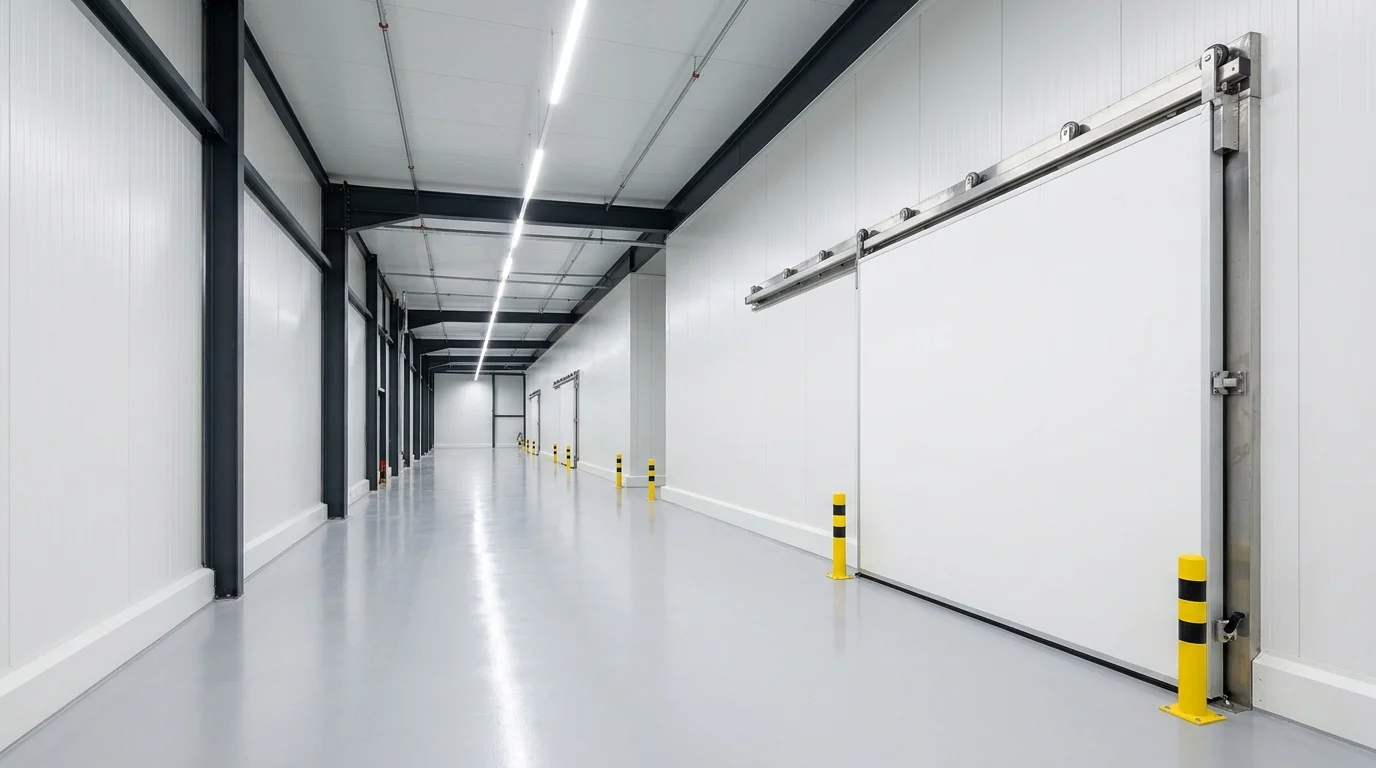
Cold Room Surface Area (m²), Volume (m³), Panel Thickness & Door Selector
Enter external room dimensions, operating temperature regime, and doorway traffic to calculate panel area and recommended door specs.
Preliminary Engineering & BOQ Summary
Este resultado tiene fines de predimensionamiento técnico. El espesor final del panel, el paso libre de puerta y la carga frigorífica son confirmados por nuestro equipo de ingeniería según las condiciones reales del proyecto.
Cold Storage Building Space Program, Steel Tonnage & Door/Panel Estimator
Enter your planned facility footprint to simulate cold chamber area, +8°C ante-room corridor, structural steel tonnage, and door schedule.
Building Space Program & Preliminary Quantities
Export Container (20' DC / 40' HC) & 13.60m Truck Loading Planner
Calculate packed volume, gross weight, bundle count, and required containers/trailers for international shipments.
Logistics Volume, Weight & Vehicle Estimate
Productos, Sistemas y Páginas Técnicas Relacionadas
 ENGINEERING LIBRARY
SerPan Cold Technical Center & Engineering Library
Access interactive datasheets, CAD detail schematics, selection guides, and our 3-in-1 engineering calculator hub built for project engineers, contractors, and investors.
COLD ROOM SOLUTIONS
Turnkey & Modular Cold Room Solutions
From compact walk-in cold rooms inside existing buildings to multi-chamber industrial storage and blast freezing suites, we engineer the complete package.
 COLD STORAGE BUILDINGS
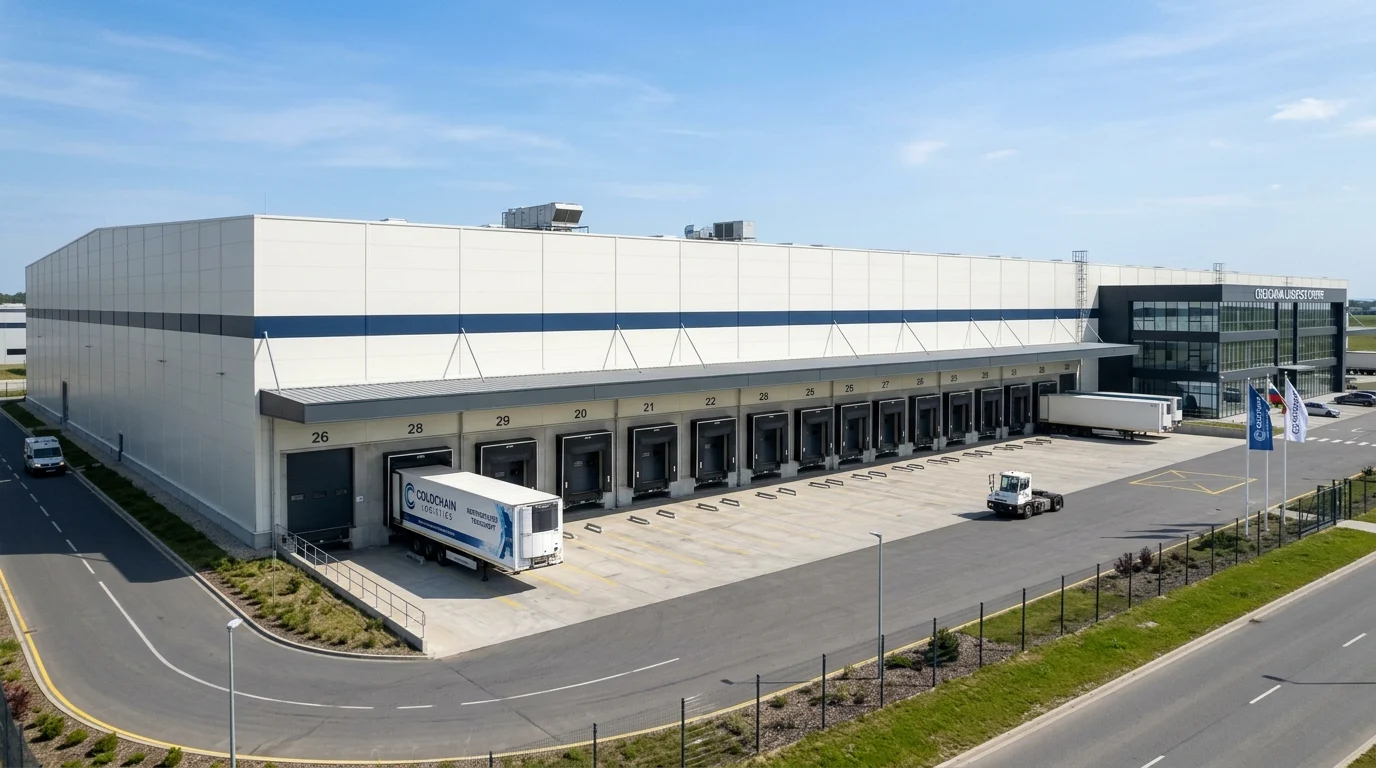
Cold Storage Buildings: Structural Steel, Thermal Envelope & Turnkey Facilities
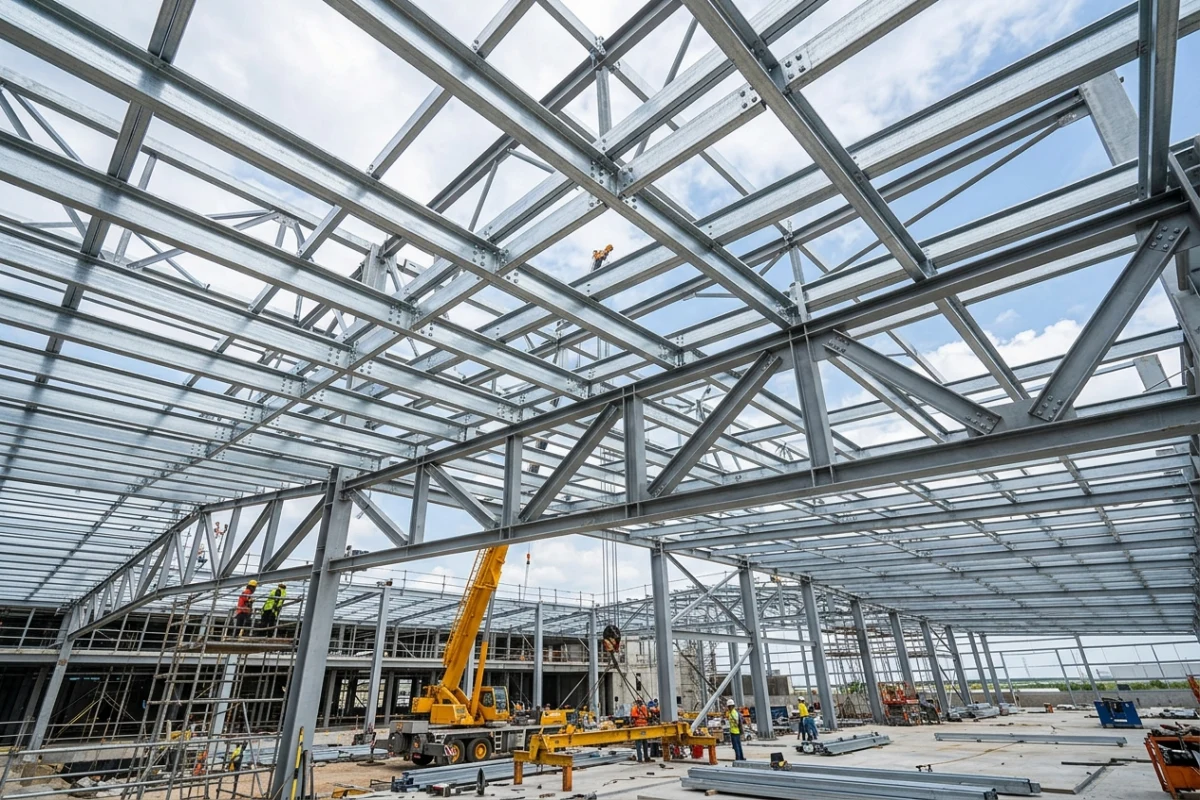
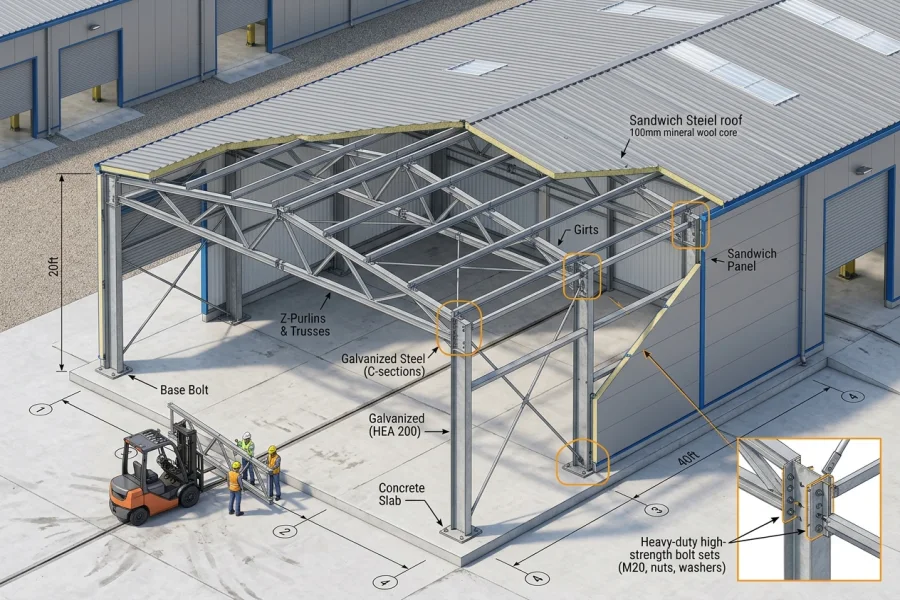
Unlike suppliers limited to internal room panels, SerPan Cold integrates SerHangar structural steel, SerPan Metal external cladding, and SerProfil custom flashings to deliver complete standalone cold storage buildings from slab to roof.
 ISPM-15 & CONTAINER LOADING
Export Packaging, Container/Truck Loading & Customs Documentation
To ensure cold room doors and sandwich panels arrive undamaged across thousands of kilometers, we engineer protective export crating and container/trailer load plans.
Preguntas Frecuentes de Ingeniería y Suministro
Preguntas técnicas frecuentes sobre puertas frigoríficas, selección de espesor de panel, sellado térmico y proyectos llave en mano.
C21 Can refrigeration capacity be calculated based solely on room volume (m³)?
No. Room volume alone only provides a preliminary estimate. Actual cooling load depends on daily product intake tonnage, product entry temperature, specific heat, pull-down time, ambient climate, and door opening frequency.
C22 Is a frozen storage room (-18°C) the same as a blast freezer room (-35°C / -40°C)?
Definitely not. A frozen storage room (-18°C) maintains products that are already frozen. A blast freezer (-35°C / -40°C) uses high-velocity airflow and high refrigeration capacity to rapidly pull down core product temperature to -18°C within hours.
C23 Should we choose individual split condensing units or a central multi-compressor rack system?
For facilities with 1 to 4 rooms or where independent redundancy per room is desired, industrial split units (R01) are cost-effective. For large multi-room logistics hubs and food factories, central multi-compressor racks (R02) offer superior energy efficiency and capacity modulation.
C24 Why is fin spacing critical when selecting cold room unit coolers (evaporators)?
While 4–6 mm fin spacing works for positive (+2/+8°C) chillers, sub-zero freezers (-18°C) require 7–8 mm and blast freezers require 10–12 mm wide fin spacing to prevent rapid frost bridging and airflow blockage.
C25 Why is remote temperature monitoring and alarm data-logging (R04) necessary?
Digital data-logging and mobile alarm panels protect high-value inventory against power outages, open doors, or defrost faults while providing mandatory historical temperature audit trails for food safety and GDP inspections.
C26 Why should an ante-room (precooling / buffer corridor) be included in cold store design?
Opening a -18°C or +2°C chamber directly to +35°C outdoor air causes severe moisture ingress, icy floors, and high power consumption. A temperature-controlled +8/+12°C ante-room acts as a thermal airlock.
Seleccione su Vía de Presupuesto (4 Canales Técnicos)
Seleccione el flujo adecuado a su proyecto; sus medidas y criterios técnicos se enviarán directamente a nuestra Mesa de Ingeniería por WhatsApp. (+90 (505) 507 04 18)