Cold Room Panel Thickness & Thermal Insulation Sizing Guide
Engineering guide comparing 60 mm to 200 mm PUR/PIR cold room panel thicknesses, U-values, condensation thresholds, and lifecycle energy savings.
1. The Hidden Electricity Cost and Condensation Risk of Undersized Panels
Using 80 mm panels instead of 120–150 mm in a -18°C freezer causes outer surface temperatures to drop below ambient dew point, creating surface condensation while increasing compressor electricity consumption by 30–40%.
2. PUR vs PIR Core Chemistry and Surface Coating Selection
At 40–42 kg/m³ closed-cell density, PIR provides enhanced fire performance required by industrial insurers, while PVC-laminated or AISI 304 stainless steel facings protect against corrosive food-processing washdowns.
Related Manufactured Products & System Solutions
60–200 mm • PUR / PIR
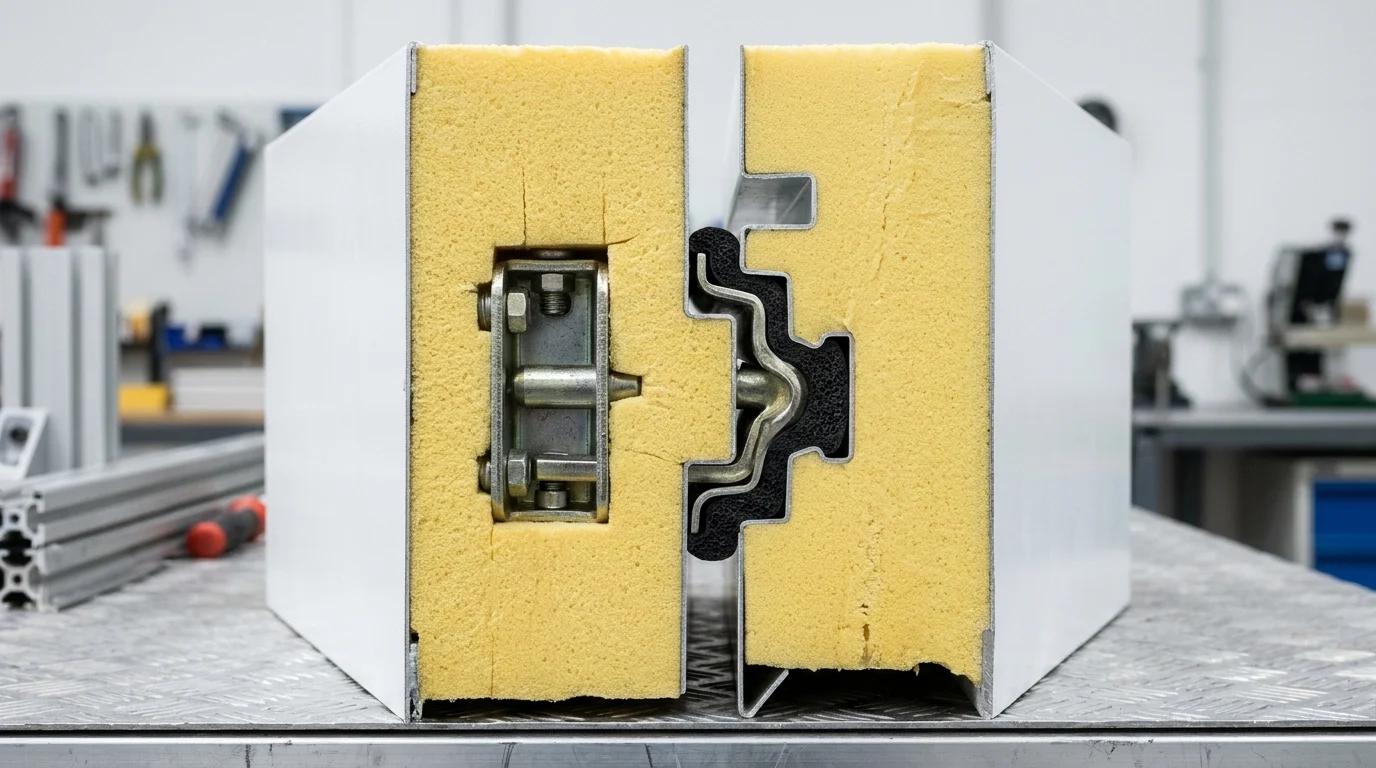
Deep-Labyrinth Wall/Ceiling Panel
40–42 kg/m³ density tongue-and-groove thermal-break cold room sandwich panel.
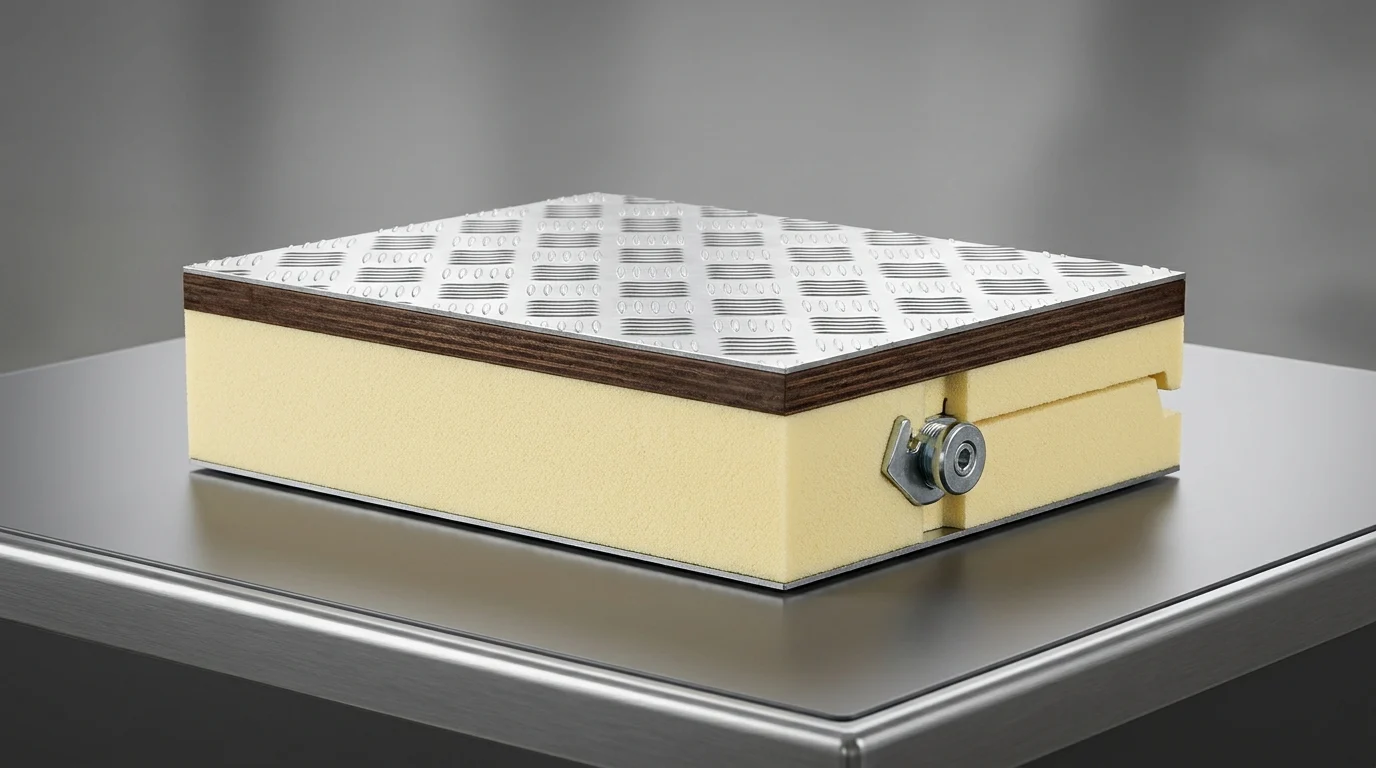 PLYWOOD + AISI 304 CrNi
Non-Slip Stainless & Plywood Floor Panel
Marine birch plywood reinforced floor panel with diamond-plate AISI 304 stainless steel top.
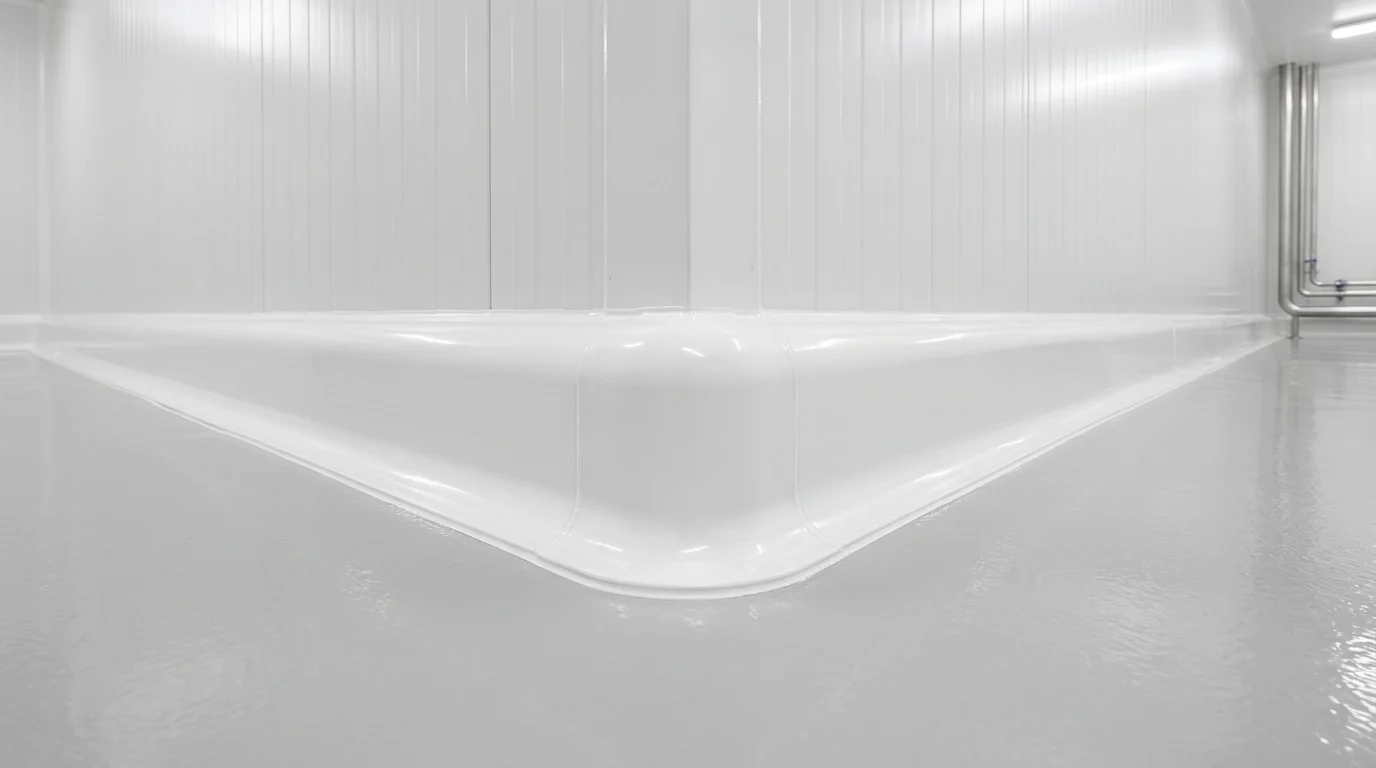 HACCP • OVAL KÖŞE
Hygienic Cove Skirting & Corner Profile
Antibacterial PVC rounded cove profiles eliminating 90° corners at floor/wall junctions.
Technical Comparison & Engineering Selection Matrix
| Panel Kalınlığı | U-Değeri (W/m²K) | Hedef Oda Sıcaklığı | Tipik Kullanım Alanı |
|---|---|---|---|
| 60 mm PUR / PIR | 0.35 W/m²K | +8°C / +15°C | Serin Depo, Gıda Hazırlık, Paketleme ve İşleme Holü |
| 80 mm PUR / PIR | 0.26 W/m²K | +2°C / +8°C | Standart Pozitif Soğuk Muhafaza ve Ön Soğutma Koridoru |
| 100 mm PUR / PIR | 0.21 W/m²K | 0°C / +4°C | Hassas Taze Muhafaza, Et/Süt/Meyve Soğuk Odası |
| 120 mm PUR / PIR | 0.18 W/m²K | -18°C / -22°C | Standart Donmuş Muhafaza Odası |
| 150 mm PUR / PIR | 0.14 W/m²K | -22°C / -28°C | Derin Dondurma, Su Ürünleri ve Dondurma Deposu |
| 180–200 mm PUR / PIR | 0.12–0.11 W/m²K | -35°C / -40°C | Endüstriyel Şoklama Odası ve Şok Tüneli |
Deep Labyrinth / Cam-Lock Panel Joint & HACCP Rounded Cove Section
Thermal-break tongue-and-groove polyurethane joint geometry combined with R45 rounded PVC hygienic skirting that eliminates 90° bacterial traps.
Related Products, Systems & Engineering Pages
60–200 MM PUR / PIR PANELS
Cold Room Insulated Panels & Industrial Building Sandwich Panels
Backed by SerPan Cold and SerPan Metal manufacturing strength, we supply both the internal vapor-tight cold room envelope (60–200 mm) and the external roof and facade cladding of your facility.
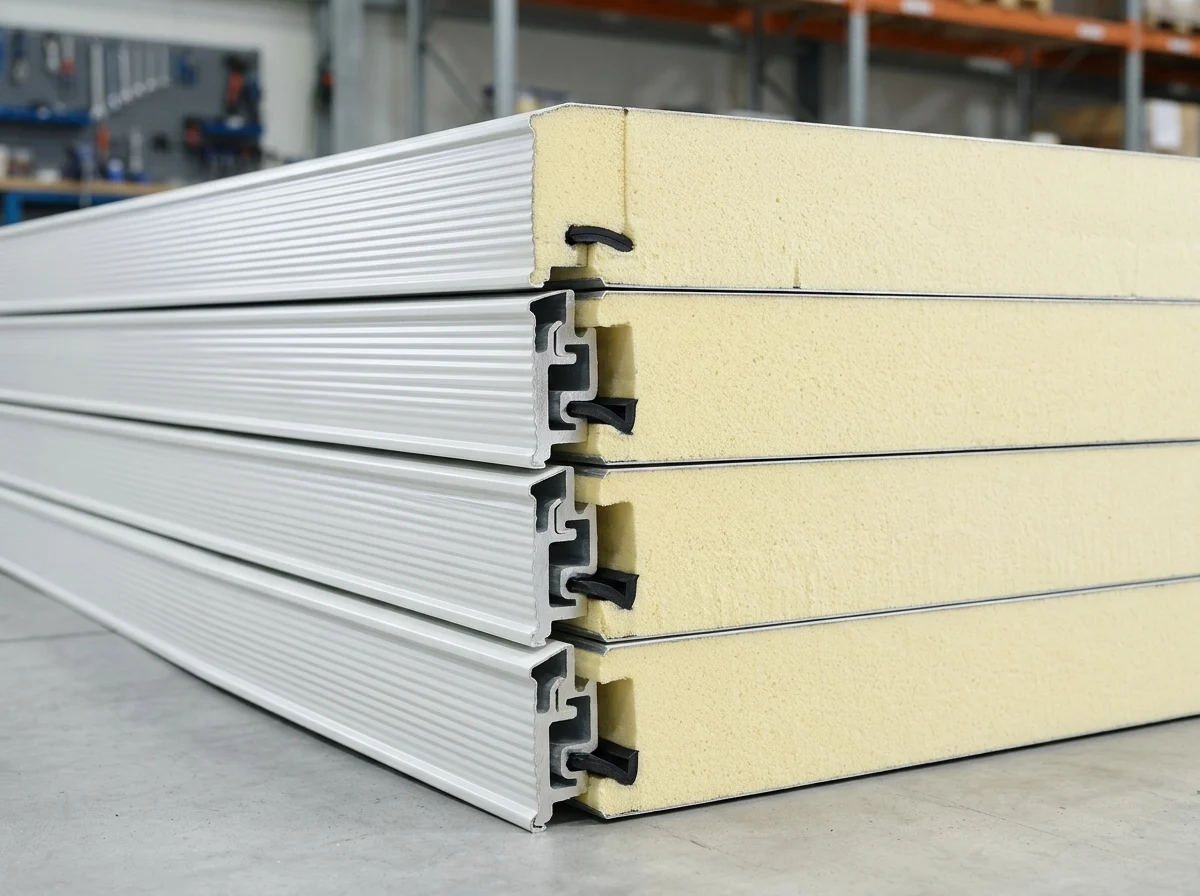 WALL & CEILING PANELS
Cold Room Wall & Ceiling Panels (60 mm – 200 mm)
A cold room's energy consumption is governed by the thermal transmittance (U-value) and vapor tightness of its wall and ceiling panel joints. Our deep labyrinth tongue-and-groove profile eliminates thermal bridges.
FLOOR PANELS & INSULATION
Cold Room Floor Panels & Heavy-Duty Floor Insulation Solutions
Preventing ground heat gain and sub-zero frost heave requires selecting the right floor structure: prefabricated cam-lock floor panels for walk-in rooms, or high-compressive under-slab insulation for forklift warehouses.
PUR / PIR CORE & COATING
PIR / PUR Core Chemistry & Surface Coating Selection Guide
Selecting PIR fire-retardant cores for facility insurance compliance and specifying PVC or AISI 304 stainless facings for aggressive washdown environments ensures decades of trouble-free operation.
Frequently Asked Engineering & Supply Questions
Frequently asked technical questions regarding cold room doors, panel thickness selection, thermal sealing details, and turnkey project workflows.
C11 Which cold room panel thickness should be selected for each operating temperature regime?
General engineering guideline: 60–80 mm for +8/+15°C cool storage, 80–100 mm for +2/+8°C chillers, 100 mm for 0/+4°C fresh storage, 120–150 mm for -18/-22°C freezers, 150–180 mm for -25/-30°C deep freeze, and 180–200 mm for -35/-40°C blast freezers.
C12 What is the main difference between PUR and PIR insulated cold room panels?
Both provide high thermal insulation at 40–42 kg/m³ density, while PIR (Polyisocyanurate) features an enhanced isocyanurate ring structure that delivers superior fire resistance, reduced smoke emission, and compliance with industrial property insurance standards.
C13 What is the difference between Cam-Lock modular panels and continuous-line slip-joint panels?
Cam-lock modular panels allow rapid assembly and future disassembly/relocation for walk-in cold rooms. Continuous-line labyrinth slip-joint panels are engineered for tall industrial cold storage buildings and long partition walls up to 13.5 meters.
C14 Why is floor insulation critical in cold rooms and freezer chambers?
Without proper floor insulation in sub-zero rooms, ground moisture freezes and expands (frost heave), cracking the concrete slab. Modular rooms use birch-plywood + stainless steel floor panels, while forklift-rated warehouses use multi-layer high-compressive XPS/PIR below a reinforced concrete slab with underfloor heating or ventilation.
C15 Why are hygienic cove skirtings and rounded internal/external corner profiles (A02) required?
Sharp 90-degree wall-to-floor and wall-to-wall angles trap bacteria and organic residues. HACCP, IFS, and BRCGS food safety audits require coved (rounded radius) PVC/aluminium hygienic profiles for effortless sanitation.
C16 Which cold rooms require a pressure relief valve (A03)?
Rapid air contraction after door closure or defrost cycles creates strong vacuum pressure inside sealed rooms. Heated pressure relief valves are mandatory in all sub-zero freezers and blast rooms to prevent panel implosion and vacuum-locked doors.
Select Your Enquiry Pathway (4 Specialized Engineering Tracks)
Select the pathway matching your requirement; your dimensions and technical parameters will be formatted and sent directly to our WhatsApp Engineering Desk. (+90 (505) 507 04 18)