Cold Room Unit Coolers (Evaporators) & Heat Exchangers
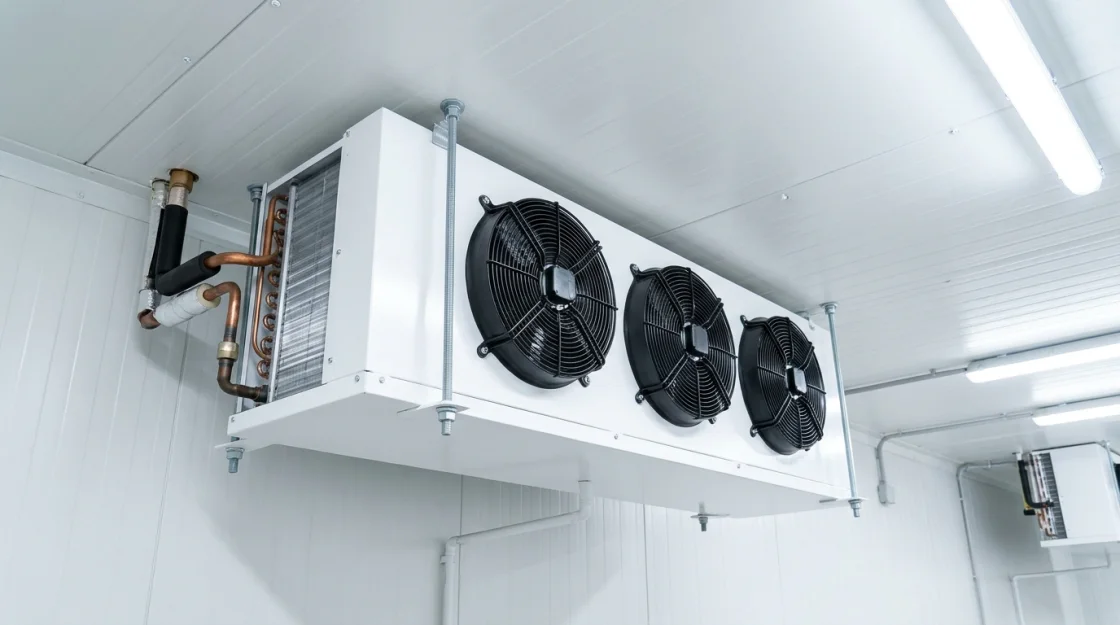
Preventing product dehydration, ensuring uniform pallet temperatures, and maintaining draft-free working halls depend on selecting the right evaporator geometry and fin spacing (4 / 6 / 8 / 10 / 12 mm).
بطاقة الملخص الهندسي السريع
UNIT COOLERS & EVAPORATORSSplit Units, Central Racks, Unit Coolers & Control Panels
 SPLIT CONDENSING UNITS
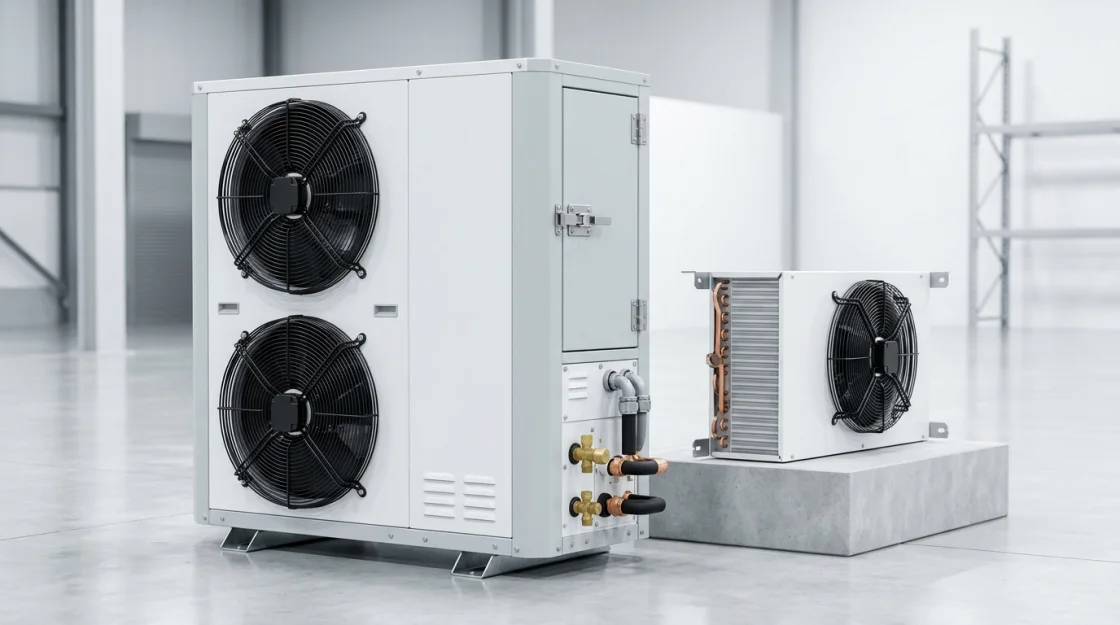
Industrial Split Condensing Units
Weatherproof acoustic-housed and open-frame split condensing units for +2/+8°C chillers, -18/-22°C freezers, and -35°C blast freezers.
 CENTRAL RACK SYSTEMS
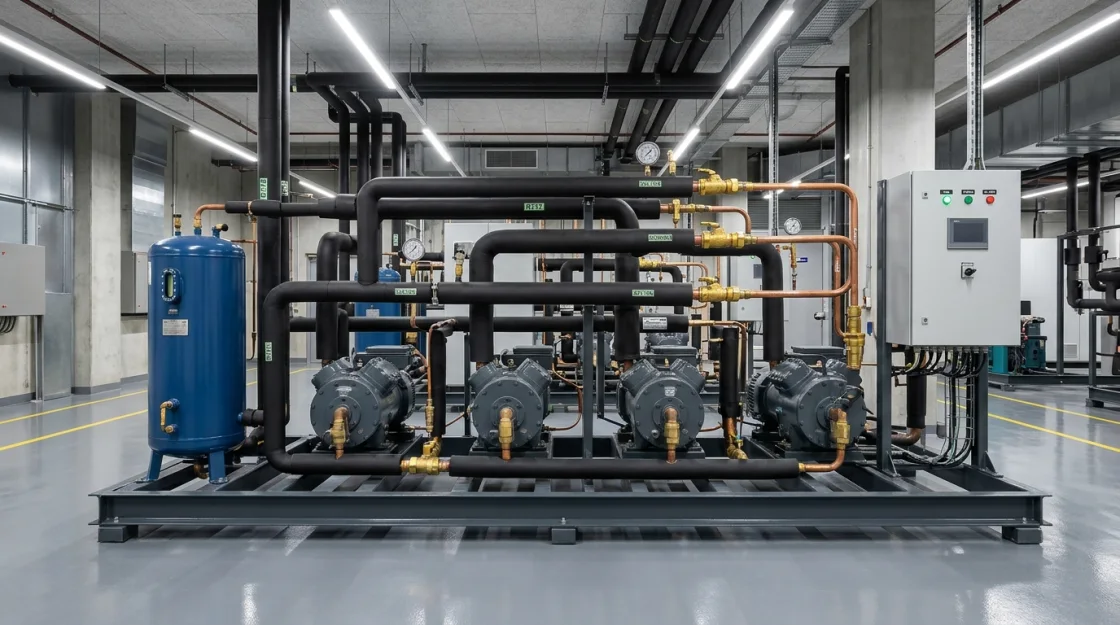
Central Multi-Compressor Rack Refrigeration Systems
High-efficiency multi-compressor central refrigeration racks for large cold storage warehouses, food factories, and distribution hubs.
UNIT COOLERS & EVAPORATORS
Cold Room Unit Coolers (Evaporators) & Heat Exchangers
Cubic industrial unit coolers, low-velocity dual-discharge ceiling evaporators for processing halls, and high-thrust blast freezer coils.
 CONTROL & MONITORING
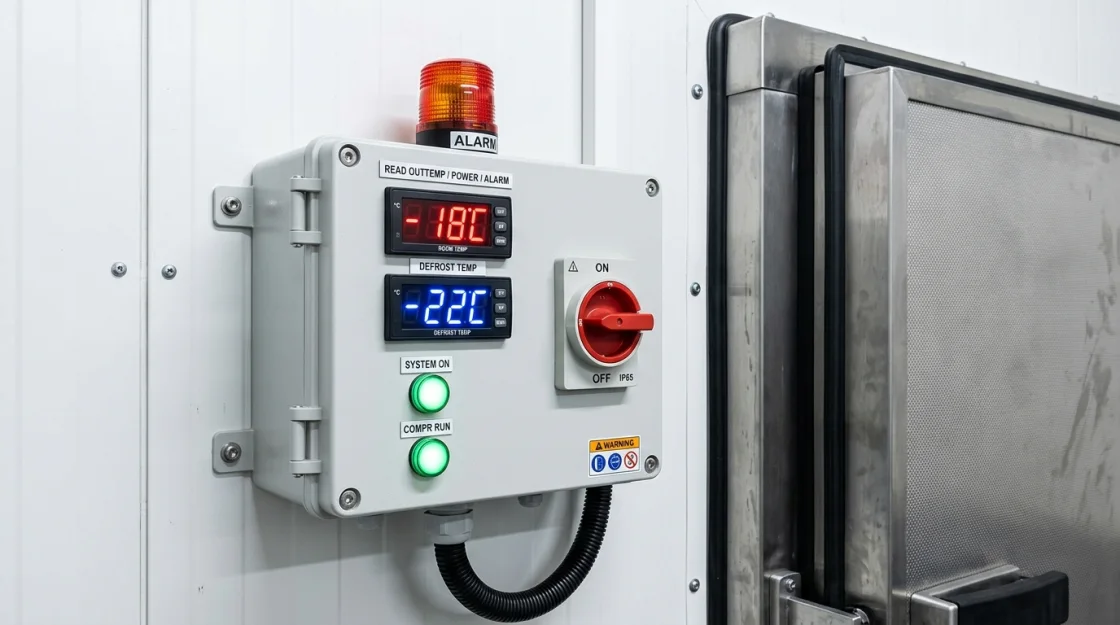
Cold Room Control Panels, Data-Logging & Remote Alarm Systems
HACCP and GDP compliant digital temperature data-loggers, electrical control panels, door-ajar alarms, and cloud/mobile remote monitoring.
Integrated Cold Chain Building, Panel & Door Systems
42 kg/m³ PUR / B-s1,d0 PIR sandwich panels, heavy-duty industrial cold storage doors, and central refrigeration packages manufactured at our Gebze plant.
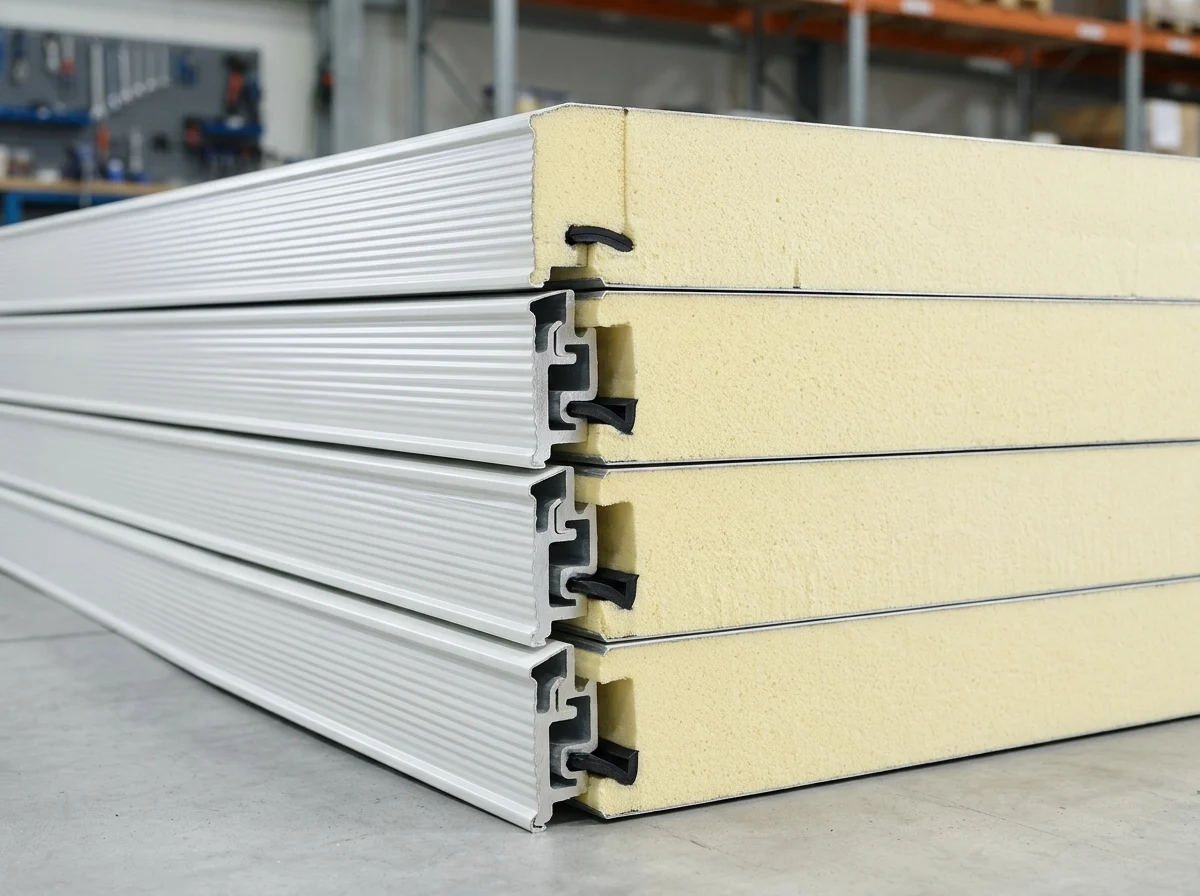 60–200 MM PUR / PIR PANELS
42 kg/m³ PUR & B-s1,d0 PIR Cold Room Panels
Cam-lock or tongue-and-groove joints with 0.50 mm DX51D+Z pre-painted galvanized steel facings.
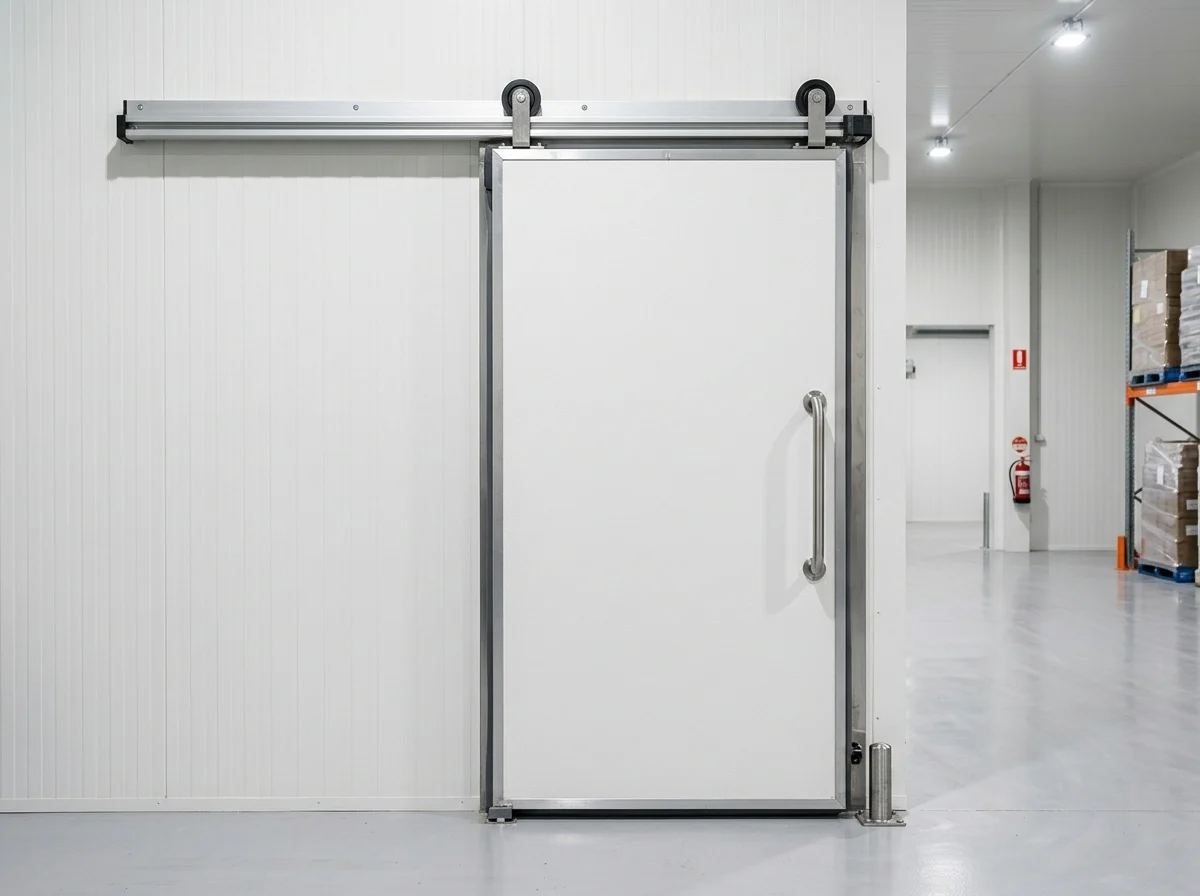 SPC DOOR SYSTEMS
Industrial Sliding, Hinged & Monorail Doors
Heated frames, dual-row EPDM gaskets, and heavy-duty anodized aluminum tracks for -40°C blast and freezer rooms.
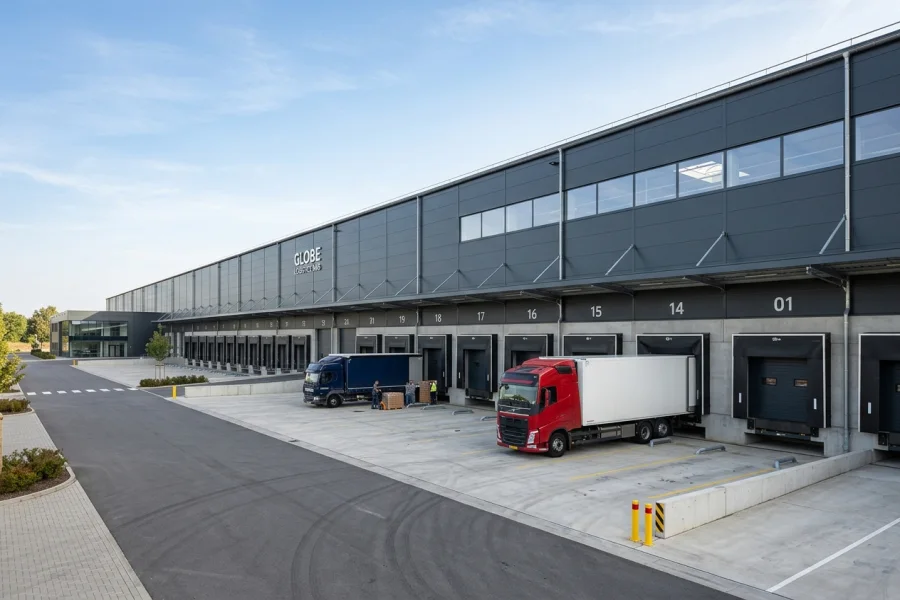 COLD STORAGE BUILDINGS
Steel-Framed Turnkey Cold Storage Buildings
187 m² to 1,000+ m² bolted structural steel frame, central refrigeration racks, and docked logistics facilities.
المنتجات والأنظمة والصفحات الهندسية ذات الصلة
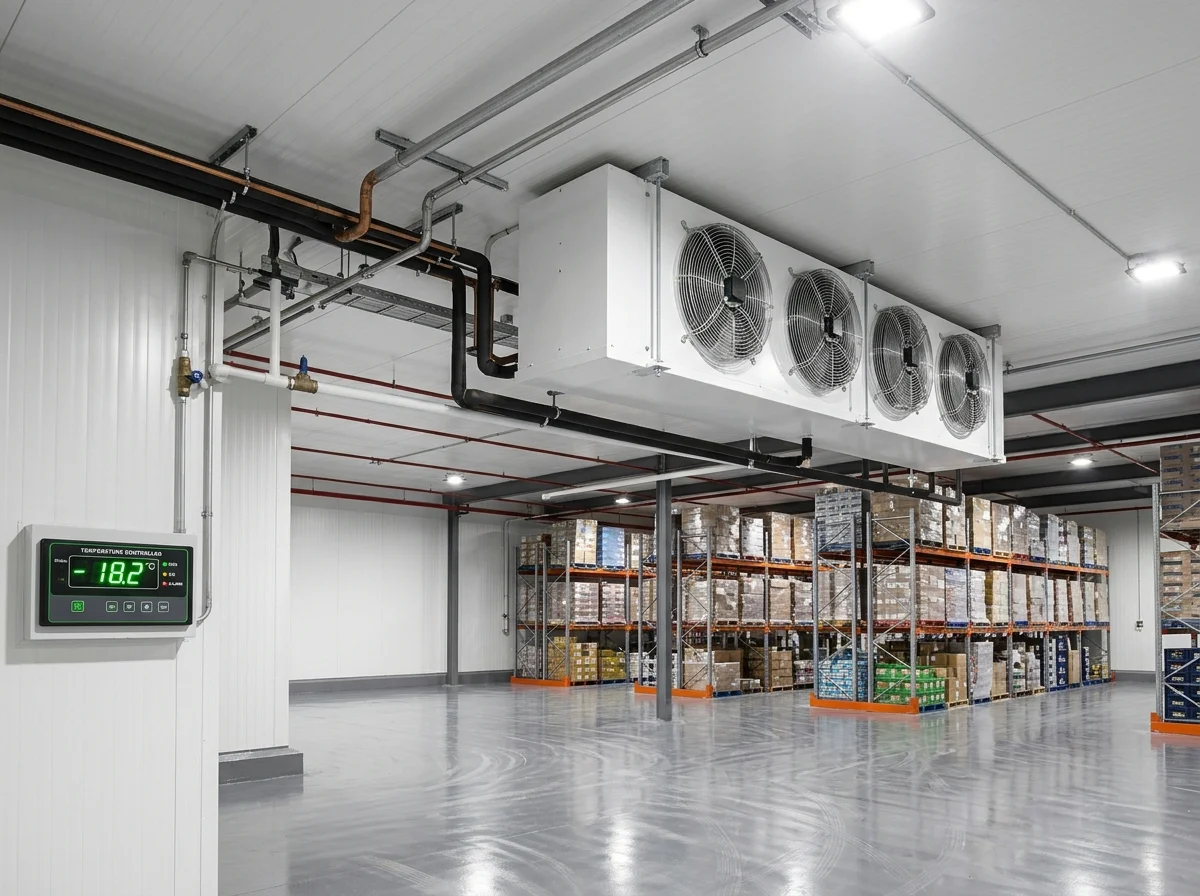 INDUSTRIAL REFRIGERATION
Cold Storage Refrigeration Systems & Control Solutions
Matching the insulated thermal envelope with properly sized refrigeration equipment cuts power consumption by up to 25%. We engineer complete cooling packages tailored to your product intake and climate zone.
SPLIT CONDENSING UNITS
Industrial Split Condensing Units
Providing independent temperature control and redundancy for each room, our split condensing units feature tropicalized condensers (+43°C / +48°C ambient) and pre-wired electrical panels.
CENTRAL RACK SYSTEMS
Central Multi-Compressor Rack Refrigeration Systems
For multi-room cold storage facilities and food processing plants, central compressor racks modulate capacity dynamically across partial loads, maximizing energy efficiency and N+1 reliability.
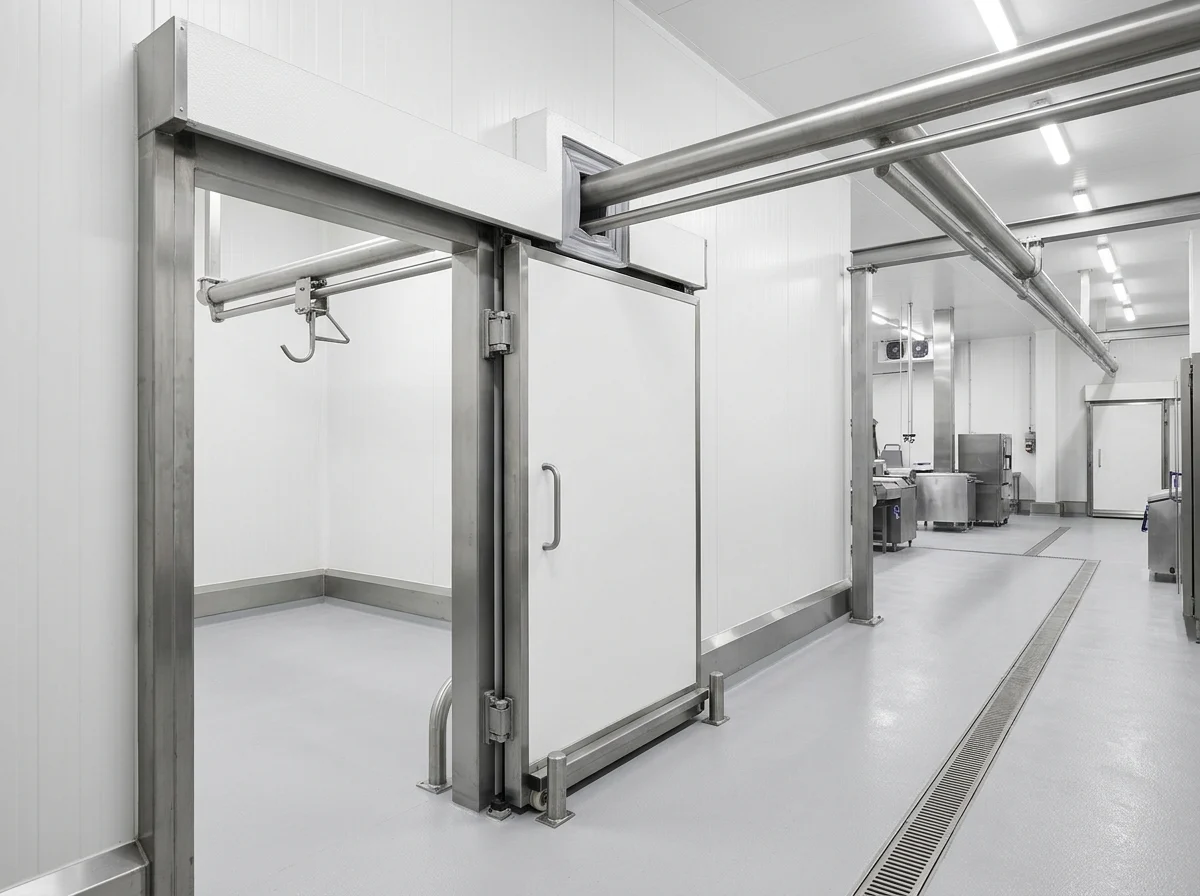 MEAT & ABATTOIR COLD ROOMS
Meat Processing, Slaughterhouse & Abattoir Cold Storage Solutions
We equip slaughterhouses and meat plants with monorail doors (D04), hygienic PVC/stainless panels, rounded HACCP coves (A02), carcass pre-cooling rooms, and -40°C blast freezers.
الأسئلة الهندسية والتوريدية الشائعة
الأسئلة الفنية الأكثر شيوعاً حول أبواب الغرف الباردة، اختيار سماكة الألواح، تفاصيل الإحكام الحراري ومشاريع تسليم المفتاح.
C21 Can refrigeration capacity be calculated based solely on room volume (m³)?
No. Room volume alone only provides a preliminary estimate. Actual cooling load depends on daily product intake tonnage, product entry temperature, specific heat, pull-down time, ambient climate, and door opening frequency.
C22 Is a frozen storage room (-18°C) the same as a blast freezer room (-35°C / -40°C)?
Definitely not. A frozen storage room (-18°C) maintains products that are already frozen. A blast freezer (-35°C / -40°C) uses high-velocity airflow and high refrigeration capacity to rapidly pull down core product temperature to -18°C within hours.
C23 Should we choose individual split condensing units or a central multi-compressor rack system?
For facilities with 1 to 4 rooms or where independent redundancy per room is desired, industrial split units (R01) are cost-effective. For large multi-room logistics hubs and food factories, central multi-compressor racks (R02) offer superior energy efficiency and capacity modulation.
C24 Why is fin spacing critical when selecting cold room unit coolers (evaporators)?
While 4–6 mm fin spacing works for positive (+2/+8°C) chillers, sub-zero freezers (-18°C) require 7–8 mm and blast freezers require 10–12 mm wide fin spacing to prevent rapid frost bridging and airflow blockage.
C25 Why is remote temperature monitoring and alarm data-logging (R04) necessary?
Digital data-logging and mobile alarm panels protect high-value inventory against power outages, open doors, or defrost faults while providing mandatory historical temperature audit trails for food safety and GDP inspections.
C26 Why should an ante-room (precooling / buffer corridor) be included in cold store design?
Opening a -18°C or +2°C chamber directly to +35°C outdoor air causes severe moisture ingress, icy floors, and high power consumption. A temperature-controlled +8/+12°C ante-room acts as a thermal airlock.
اختر مسار طلب عرض السعر (4 مسارات هندسية متخصصة)
اختر المسار المناسب لطلبك؛ سيتم تنسيق المقاسات والمعايير الفنية وإرسالها مباشرة إلى مكتبنا الهندسي عبر واتساب. (+90 (505) 507 04 18)